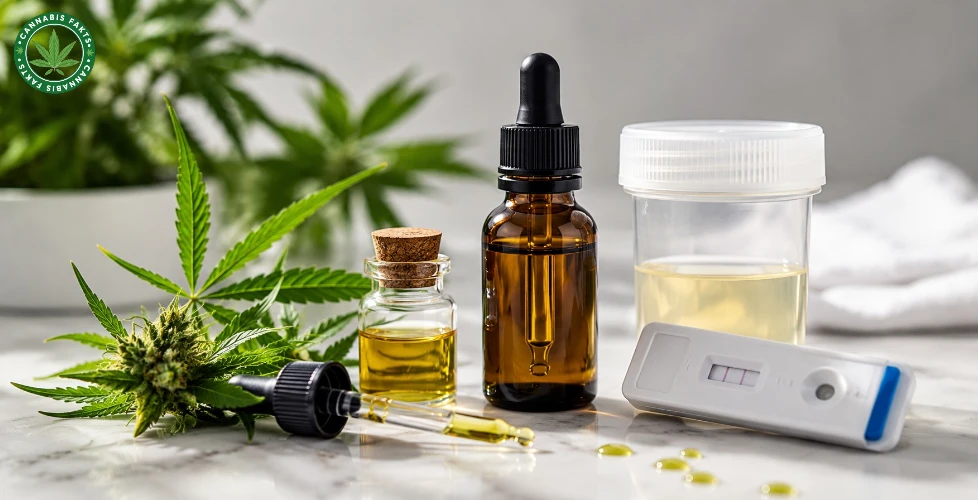
CBD has become increasingly popular among people looking for hemp-derived wellness products, including CBD oils, gummies, capsules, tinctures, and topicals. However, one question continues to concern consumers who are subject to workplace, athletic, legal, or probationary drug screening: does CBD show up on drug test results?
The short answer is that pure CBD itself is generally not what standard drug tests are designed to detect. Most common drug screenings look for specific metabolites of THC, the intoxicating cannabinoid found in cannabis. However, some CBD products can contain small amounts of THC, and that distinction is extremely important.
A product labeled “CBD” does not automatically mean it contains zero THC. Full-spectrum CBD products, for example, can legally contain small amounts of THC depending on applicable regulations. Regular use, product quality, dosage, and the sensitivity of the test can all influence the possibility of a positive result.
This guide explains how CBD interacts with drug testing, the differences between full-spectrum, broad-spectrum, and CBD isolate products, what urine tests actually detect, and why people facing workplace or probation testing should take extra precautions.
What Is CBD?
Cannabidiol, commonly known as CBD, is one of the many naturally occurring cannabinoids found in the cannabis plant. Unlike THC, CBD is not generally associated with the intoxicating “high” commonly linked with marijuana.
CBD products are available in several forms, including:
- CBD oil and tinctures
- CBD gummies
- CBD capsules
- CBD beverages
- CBD creams and lotions
- CBD vape products
- CBD isolate products
- Full-spectrum hemp extracts
- Broad-spectrum hemp extracts
Although CBD and THC come from the same plant family, they interact with the body’s endocannabinoid system differently.
This difference matters when discussing drug testing because conventional cannabis drug tests generally target THC or THC metabolites rather than CBD itself.
Does CBD Show Up on Drug Tests?
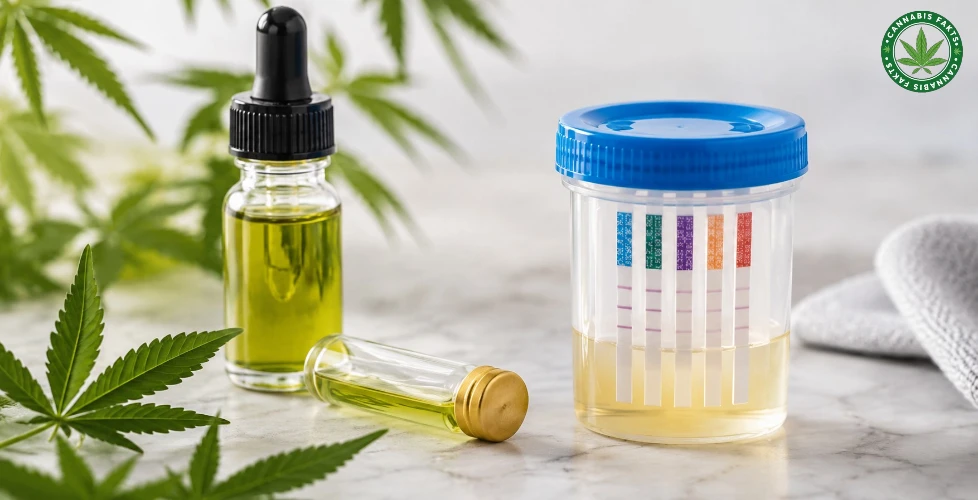
For people wondering does CBD shows up on drug tests, the key point is that standard drug screenings typically do not target cannabidiol itself.
Most employment and other common drug tests are designed to identify particular drug compounds or their metabolites. In cannabis testing, the primary target is generally a metabolite associated with THC, rather than CBD.
Therefore, using a product containing only pure CBD should not normally produce a positive result for THC.
However, there is an important complication: many commercially available CBD products are not made with CBD isolate. Some contain broad-spectrum or full-spectrum hemp extract, and full-spectrum products may contain trace amounts of THC.
If enough THC enters the body through repeated CBD use, it can potentially contribute to detectable THC metabolites.
That means the more accurate answer is not simply “CBD cannot cause a positive drug test.” Instead, the answer depends heavily on what is actually contained in the CBD product.
Why CBD Products May Contain THC
Hemp naturally contains multiple cannabinoids. During extraction, manufacturers can preserve some of these compounds in the final product.
Full-spectrum CBD products are specifically designed to retain a range of naturally occurring hemp compounds. Depending on the product and applicable regulations, this can include a small amount of THC.
Broad-spectrum products are generally processed to remove THC while retaining other cannabinoids and plant compounds.
CBD isolate is the most purified option and is designed to contain CBD without other cannabinoids.
Even when a product claims to contain little or no THC, inaccurate labeling or contamination can create additional uncertainty.
Does CBD Oil Show Up on Drug Tests?
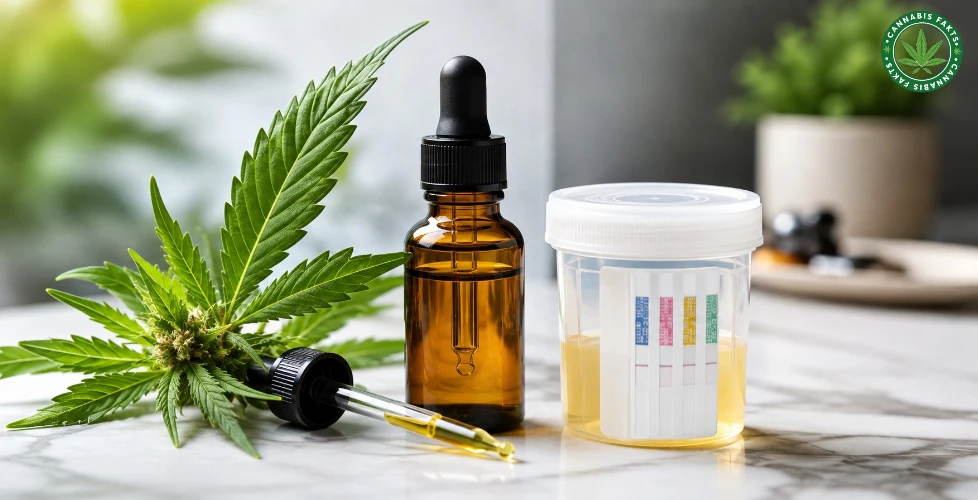
A common question is does cbd oil show up on drug tests, particularly among people who use CBD tinctures regularly.
CBD oil itself is not typically the target of a standard THC drug test. The bigger issue is whether the oil contains THC.
If a CBD oil is made from full-spectrum hemp extract, it may contain trace THC. Repeated use can potentially expose the consumer to enough THC for metabolites to accumulate and become detectable.
CBD isolate oil presents a different situation because it is formulated around isolated cannabidiol and does not intentionally contain the other cannabinoids found in full-spectrum extracts.
However, consumers should not rely solely on marketing terms. Checking the product’s certificate of analysis, ingredient information, and independent laboratory testing can provide more useful information about its cannabinoid content.
How Drug Tests Detect Cannabis Use
Understanding how testing works makes the CBD question much easier to understand.
Drug tests do not necessarily search for the original substance that someone consumed. Instead, many tests detect metabolites produced after the body processes a drug.
For cannabis screening, urine testing commonly looks for a metabolite associated with THC.
Other testing methods include:
- Urine testing
- Blood testing
- Saliva testing
- Hair testing
Each method has different detection characteristics.
Urine testing is particularly common in workplace drug screening. Blood testing may have a different detection window, while oral-fluid testing can identify recent exposure under appropriate testing conditions.
The important takeaway is that CBD and THC should not be treated as interchangeable compounds. A test designed to detect THC metabolites is not automatically a test for CBD.
Can Full-Spectrum CBD Cause a Positive Drug Test?
Full-spectrum CBD deserves particular attention because it can contain THC.
Someone who uses a full-spectrum CBD product may therefore consume small quantities of THC without intentionally using a THC-focused product.
Whether this results in a positive test depends on several variables, including:
- The concentration of THC in the product
- How much CBD product is consumed
- How frequently it is consumed
- Product manufacturing quality
- Individual metabolism
- The type of drug test
- The laboratory’s testing procedures
- The applicable testing threshold
A single factor cannot reliably predict an individual’s test result.
This is why people who must maintain strict THC abstinence should be especially cautious with full-spectrum products.
Broad-Spectrum CBD and Drug Testing
Broad-spectrum CBD is often marketed as an alternative for people who want multiple hemp compounds without THC.
The goal of broad-spectrum extraction is generally to remove THC while preserving other cannabinoids and compounds.
However, “THC-free” marketing should not automatically be interpreted as a guarantee that every batch contains absolutely zero THC.
Manufacturing processes can vary, and products can sometimes contain cannabinoids that differ from what their labels suggest.
For someone facing an important drug test, third-party laboratory documentation is much more useful than relying solely on front-label claims.
CBD Isolate and Drug Tests
CBD isolate is cannabidiol in a highly purified form.
Because the extraction process removes other cannabis compounds, CBD isolate products are generally considered the lowest-risk CBD category regarding unintended THC exposure.
That does not mean consumers should assume every product labeled “isolate” is automatically perfect for drug-testing situations.
Manufacturing quality remains important. Contamination, inaccurate labeling, or poor quality control can affect the final product.
If drug-test compliance is critical, consumers should carefully review the manufacturer’s testing information and understand that no over-the-counter supplement should automatically be treated as a guaranteed drug-test-safe product.
Does CBD Show Up on a Drug Test?
The question does cbd shows up on a drug test often comes from people preparing for employment screening.
In a conventional cannabis drug screen, CBD is generally not the primary substance being tested. Instead, the test usually focuses on THC-related compounds.
The bigger concern is accidental THC exposure from CBD products.
For example, someone may purchase a full-spectrum CBD oil believing it is completely separate from cannabis products. If that oil contains THC and is used frequently, the resulting THC exposure could potentially matter during drug screening.
This is why consumers should distinguish between:
CBD exposure: The body receives cannabidiol.
THC exposure: The body receives tetrahydrocannabinol and can produce THC metabolites.
Drug-test detection: The laboratory searches for specific compounds or metabolites according to its testing method.
Understanding those differences can prevent many misconceptions.
How Long Can THC From CBD Products Remain Detectable?
There is no universal answer for how long THC exposure from a CBD product can remain detectable.
Detection depends on numerous factors, such as:
- Frequency of use
- Amount consumed
- THC concentration
- Individual metabolism
- Body composition
- Testing method
- Test sensitivity
- Pattern of previous cannabis exposure
Someone using a THC-containing product occasionally may have a different detection profile from someone consuming it repeatedly.
For this reason, online claims promising that THC will always disappear from the body within a specific number of hours or days should be treated cautiously.
There is also no reliable home method that can guarantee a negative laboratory drug test after THC exposure.
Does CBD Show Up on Drug Tests for Work?
Workplace drug testing policies vary between employers, industries, and jurisdictions.
Some employers conduct routine screening, while others only test under particular circumstances. Certain safety-sensitive positions may have stricter requirements.
If an employer prohibits THC use, employees should carefully review the company’s drug and substance policy rather than assuming that legal hemp-derived CBD products are automatically acceptable.
Even where hemp-derived CBD products are legal to purchase, an employer’s drug-testing policy may still create practical consequences if THC metabolites are detected.
People working in safety-sensitive environments should be particularly careful because the consequences of a positive result can potentially be more serious.
Does CBD Show Up on Drug Tests Probation?
For people asking does cbd show up on drug tests probation, the situation can be more complicated than ordinary consumer drug testing.
Probation-related testing is governed by the conditions imposed in an individual’s specific case. Those conditions can vary considerably.
If a person is required to avoid THC or cannabis, using a CBD product that contains THC could create unnecessary risk.
It is therefore important not to assume that a product’s legal status, hemp labeling, or CBD content automatically makes it acceptable under probation conditions.
If probation terms prohibit cannabis, THC, or cannabinoid use, the safest approach is to understand the exact requirements that apply to the individual.
When there is uncertainty, professional legal guidance may be appropriate.
Why Product Labels Matter
CBD product labels can provide valuable information, but consumers should look beyond the front of the package.
A product may be advertised using phrases such as:
- “Hemp-derived CBD”
- “Full spectrum”
- “Broad spectrum”
- “THC-free”
- “Pure CBD”
- “CBD isolate”
These terms can mean different things depending on the formulation and manufacturing process.
A certificate of analysis, often called a COA, can provide additional information about the cannabinoid profile of a particular batch.
Consumers should look for laboratory testing that identifies:
- CBD concentration
- THC concentration
- Other cannabinoids
- Contaminants
- Batch information
- Testing date
Third-party testing cannot eliminate every risk, but it can provide greater transparency.
What Is a Certificate of Analysis?
A certificate of analysis is a laboratory report showing test results for a specific product or batch.
For CBD consumers, a COA can help verify whether the product contains the cannabinoids advertised on its packaging.
A useful COA should be associated with the product or batch being purchased rather than being a generic laboratory document uploaded without clear identification.
When evaluating a CBD product, consumers can compare the COA with the package information.
If the label claims the product contains no THC but laboratory results indicate measurable THC, that discrepancy deserves attention.
Does CBD Show Up on Drug Tests If It Is THC-Free?
If a product genuinely contains CBD without detectable THC, CBD itself generally should not cause a conventional THC-positive drug test.
However, “THC-free” should be interpreted carefully.
There is an important difference between:
No THC intentionally added
and
Verified absence of detectable THC
A reputable manufacturer should provide appropriate laboratory testing to support its claims.
People who are subject to strict testing should therefore avoid relying on assumptions based solely on product names or advertising language.
What About CBD Gummies?
CBD gummies create the same basic issue as CBD oil.
The key question is not simply whether the product is gummy. The relevant question is what cannabinoids the gummy contains.
A full-spectrum CBD gummy may contain trace THC. A CBD isolate gummy is formulated differently.
Because gummies are consumed orally, the CBD and any THC present are processed by the body after ingestion.
Consumers should read the product’s cannabinoid profile and check available laboratory reports.
What About CBD Vapes?
CBD vape products can also differ significantly in formulation.
Some contain CBD isolate, while others use full-spectrum hemp extract. Certain products may contain additional cannabinoids.
If a vape product contains THC, repeated use can result in THC exposure.
People who are subject to drug testing should therefore evaluate vape products just as carefully as oils, capsules, or gummies.
The delivery method does not eliminate the importance of the product’s cannabinoid content.
Can Secondhand Cannabis Smoke Affect a Drug Test?
Secondhand cannabis smoke is sometimes raised as a concern by people who do not intentionally consume cannabis.
Under ordinary circumstances, casual exposure to cannabis smoke is generally not expected to produce the same level of THC exposure as intentionally consuming cannabis.
However, extreme exposure in enclosed, poorly ventilated environments can be different from brief incidental exposure.
Drug-testing results depend on the testing method and exposure circumstances, so it is not appropriate to assume that every possible exposure produces the same result.
What Should You Do Before a Drug Test?
If you are subject to an upcoming drug test, the most important step is understanding the testing requirements.
Consider these precautions:
- Review the substance-use policy that applies to you.
- Check the ingredients of every CBD product you use.
- Determine whether the product is full-spectrum, broad-spectrum, or isolated.
- Look for a recent third-party certificate of analysis.
- Check whether THC is listed as detectable.
- Avoid assuming that “hemp” automatically means “THC-free.”
- If testing is legally significant, obtain appropriate professional advice.
Do not rely on detox products or internet tricks claiming to guarantee a negative result.
Should You Stop Using CBD Before a Drug Test?
There is no universal timeline that guarantees a negative test after stopping CBD.
If a CBD product contains THC, stopping its use eliminates further exposure, but previously consumed THC may still be processed and eliminated according to the individual’s circumstances.
Because detection varies substantially, nobody can responsibly guarantee that stopping CBD for a particular number of days will produce a negative result.
If a drug test has serious employment, legal, athletic, or probation consequences, it is better to understand the policy and product composition before exposure occurs.
Common Myths About CBD and Drug Tests
Several myths continue to circulate online.
Myth: CBD is THC, so every CBD product will cause a positive test.
CBD and THC are different cannabinoids. CBD itself is not what standard THC tests are generally designed to detect.
Myth: Every CBD product is completely THC-free.
Not necessarily. Full-spectrum products can contain THC.
Myth: Legal CBD cannot affect a drug test.
Legal status and drug-test results are separate issues. A legal hemp product may still contain THC.
Myth: Drinking lots of water guarantees a negative test.
There is no reliable guarantee that excessive water consumption will eliminate THC metabolites or produce a negative result.
Myth: Broad-spectrum always means zero THC.
Broad-spectrum products are generally formulated to remove THC, but consumers should verify product-specific laboratory results.
How to Choose CBD If You Are Subject to Drug Testing
People who regularly undergo drug screening should approach CBD products differently from casual consumers.
Start by determining whether CBD use is compatible with the relevant policy.
If CBD is permitted, consider products with transparent manufacturing and independent laboratory testing.
A product with clear batch-specific testing can provide more information than a product that only makes broad claims on its packaging.
CBD isolate may present less concern regarding THC exposure than full-spectrum CBD, but consumers should still verify the manufacturer’s testing and quality-control information.
Most importantly, understand that no CBD product should be promoted as an absolute guarantee of passing a drug test unless there is a scientifically and legally appropriate basis for that claim.
Does CBD Show Up on Drug Tests? The Bottom Line
So, does CBD show up on drug tests? Generally, standard drug tests are not looking for CBD itself. They are typically designed to detect specific drugs or metabolites, and cannabis screening commonly focuses on THC-related metabolites.
The real concern is THC contamination or intentional THC content in some CBD products.
Full-spectrum CBD can contain THC, while broad-spectrum CBD is generally processed to remove THC and CBD isolate is designed to contain primarily CBD. However, product quality and laboratory verification matter.
If you are facing workplace, athletic, legal, or probation-related testing, do not assume that “CBD” automatically means “drug-test safe.” Read the label, review independent laboratory results, and understand the testing policy that applies to you.
The safest approach is informed decision-making rather than relying on marketing claims, detox myths, or guaranteed detection windows.
Frequently Asked Questions
Can pure CBD cause a positive THC drug test?
Pure CBD itself is not generally what THC drug tests detect. However, products marketed as CBD may contain THC, especially full-spectrum formulations.
Does CBD oil show up on drug tests if it contains no THC?
A genuinely THC-free CBD oil should not normally cause a THC-positive result because the test is looking for THC-related compounds rather than CBD. Product quality and laboratory verification remain important.
Does CBD show up on drug tests probation?
If probation conditions prohibit THC or cannabis, using CBD products containing THC could create complications. The exact requirements depend on the terms of the individual’s probation.
Can full-spectrum CBD cause a positive drug test?
It is possible because full-spectrum CBD products can contain THC. Regular consumption may increase exposure to THC and potentially affect a THC drug test.
Is CBD isolate safer for drug testing?
CBD isolate generally presents less THC-related risk because it is designed to contain isolated CBD. However, consumers should still verify product testing and manufacturing quality.
How can I tell whether CBD contains THC?
Check the product’s ingredient information and look for a batch-specific certificate of analysis from an independent laboratory. The COA should provide information about THC and other cannabinoids.
Can broad-spectrum CBD cause a positive drug test?
Broad-spectrum CBD is generally formulated without THC, but consumers should verify the product’s laboratory results rather than relying only on marketing terminology.
How long does THC from CBD stay detectable?
There is no universal detection period. It depends on factors such as THC exposure, frequency of use, dosage, metabolism, and the type of drug test.
Is CBD legal if I have to take a drug test?
Legal status and drug-test requirements are separate issues. A hemp-derived CBD product may be legally sold while still containing enough THC to matter for certain drug-testing situations.
Should I tell my employer that I use CBD?
That depends on your workplace policy and circumstances. If drug testing is part of your employment conditions, reviewing the applicable policy before using cannabinoid products is wise.
Final Thoughts
CBD and drug testing are often discussed as though they are the same issue, but they are not. CBD is a distinct cannabinoid, while conventional cannabis screening generally focuses on THC or its metabolites.
The biggest risk comes from products that contain THC without consumers fully realizing it.
For anyone who needs to maintain strict compliance with drug-testing requirements, product transparency matters. Check cannabinoid content, review laboratory testing, understand the applicable policy, and avoid assuming that every CBD product carries the same level of risk.
Ultimately, knowing exactly what is in a CBD product is the best way to make an informed decision about whether it fits your circumstances.