
Burnout is no longer a fringe conversation — it is the defining workplace crisis of our era. With more than half of all employees reporting burnout in 2024, and nearly one-third saying they feel stressed “often or always” at work, millions of professionals are actively looking beyond traditional remedies. Enter cannabis: once stigmatized, now scientifically researched, legally expanding, and culturally embraced by a new generation of wellness-conscious workers. From CBD-infused recovery routines to after-hours relaxation rituals, the role of cannabis in modern life — and specifically in work-life balance — is expanding faster than most employers, HR departments, and policy makers can keep up. Whether you are a curious professional, a wellness advocate, or a business leader trying to understand evolving workforce expectations, this is the conversation you need to be part of right now.
The Burnout Crisis: Why Workers Are Searching for New Solutions
The numbers are striking. According to multiple studies conducted through 2024 and into 2025, 52% of employees worldwide reported experiencing burnout, with women bearing a disproportionate share at 59% compared to 46% for men. A separate analysis found that 82% of employees are at risk of burnout — a figure that should send a jolt through every boardroom and HR department in the country.
Meanwhile, Gallup’s 2024 State of the Global Workplace report revealed that 41% of employees worldwide feel a significant amount of daily stress, placing the United States among the highest-stress economies globally. Emotional exhaustion has become so common that a quarter of workers in a given month report feeling drained — not occasionally, but persistently.
KEY STATISTICS:
- 52% of employees reported burnout in 2024
- 82% are at risk of burnout (Fortune/Deloitte research)
- 41% feel significant daily stress, per Gallup 2024
- 31% of US workers feel “always stressed” — February 2025
In this environment, it’s no surprise that employees are expanding their wellness toolkit beyond yoga, meditation apps, and mental health days. The role of cannabis — once firmly off the table in workplace wellness conversations — is suddenly, unavoidably, on the agenda.
Importantly, this is not a fringe development. It reflects a broader cultural shift in how modern workers think about recovery, self-regulation, and the right to manage their own well-being outside of working hours. The intersection of cannabis and productivity, stress relief, and lifestyle balance is now a legitimate subject of scientific inquiry, policy debate, and corporate strategy.
Read More: Cannabis Therapy for Chronic Pain: Benefits & What to Know
What Is the Role of Cannabis in Work-Life Balance?
To understand the role of cannabis in work-life balance, it helps to be precise about what that role actually is — and what it is not. Most workplace wellness discussions about cannabis are not about consumption during working hours. They are about the growing number of employees using cannabis after hours as a tool for decompression, sleep support, pain relief, or anxiety management.
The distinction matters enormously. Work-life balance, at its core, is about the quality of recovery time away from professional responsibilities. For decades, alcohol has occupied this cultural space — the Friday evening drink, the post-presentation cocktail. In 2025, a significant segment of the workforce is quietly shifting toward cannabis as an alternative, citing lower perceived health risks, less physical dependency, and more nuanced therapeutic benefits.
We are witnessing a generational redefinition of what healthy decompression looks like. For Millennials and Gen Z especially, cannabis is replacing alcohol as the after-work wind-down of choice. — Workplace Wellness Analyst, Human Resource Management Journal, 2025
The Two Faces of Cannabis in Modern Wellness
The role of cannabis in the work-life balance conversation breaks into two broad categories:
- CBD-dominant products — non-psychoactive cannabidiol formulations used for anxiety relief, sleep support, inflammation reduction, and general relaxation without cognitive impairment.
- THC-containing products — consumed recreationally or medically in jurisdictions where legal, used after working hours for deeper relaxation, stress release, or pain management.
Both categories are experiencing surging consumer interest. The global CBD market was valued between $9–11 billion in 2024 and continues to expand, with the primary demographic being working professionals aged 25–44 — precisely the segment most affected by workplace stress and burnout culture.
Cannabis for Stress Relief: What the Research Actually Says
One of the most compelling arguments for the role of cannabis in work-life balance is the growing body of clinical and observational research on its stress-relieving properties — particularly those associated with CBD.
The CBD-Anxiety Connection
A 2024 University of Florida survey of 632 patients found that 95.3% reported anxiety relief from cannabis use, with less than 1% reporting a worsening of symptoms — a response rate that exceeds the 50–60% typically seen with conventional SSRIs. A separate meta-analysis covering 316 participants calculated an effect size for CBD on anxiety of −0.92 (Hedges’ g), which is classified as a “large” effect by clinical standards.
That said, researchers consistently note methodological limitations — many studies are observational, sample sizes vary, and long-term effects remain less understood. The scientific community is calling for more rigorous, longitudinal research to fully establish causality and dosing guidelines.
Key Findings from Current Research:
- CBD shows measurable anxiolytic (anxiety-reducing) effects across multiple clinical measurements
- 25–45% symptom reduction in responders occurs within 2–4 weeks in controlled settings
- Serotonin modulation contributes to mood and stress effects beyond anxiety alone
- Research on precise daily dosing for stress management remains inconclusive
- As of 2022, 23% of US adults had used cannabis in the past year, with many citing relief from anxiety and stress
Cannabis and Relaxation: The Neurochemical Picture
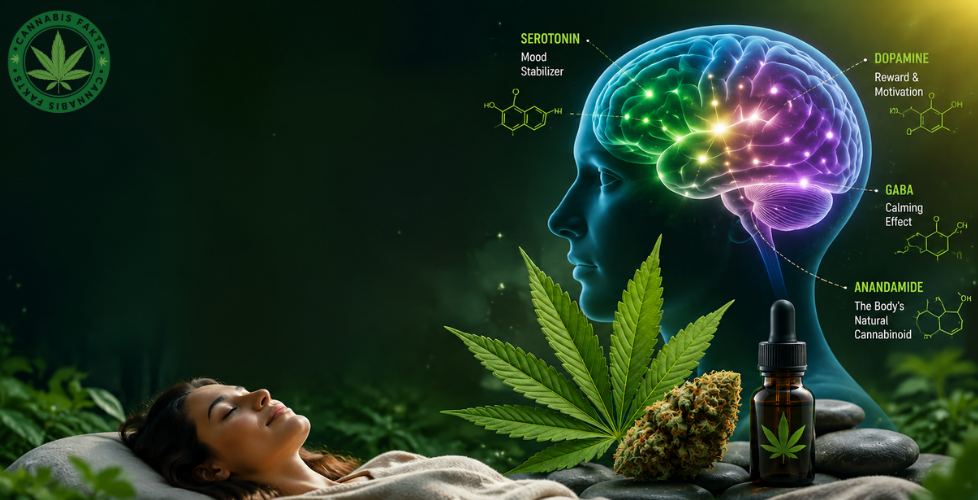
At a biological level, both THC and CBD interact with the body’s endocannabinoid system — a regulatory network involved in mood, sleep, appetite, pain, and stress response. This system doesn’t merely respond to cannabis; it is part of our innate stress-regulation architecture. When overstressed workers report that cannabis helps them “switch off,” there is genuine neurochemical reasoning behind that experience.
However, the effects vary considerably by individual biology, strain composition, dosage, and method of consumption — which is why blanket claims about cannabis as a universal stress cure are scientifically premature and potentially misleading.
Read More: Cannabis and Mental Health: What Research Says
Cannabis and Mental Wellness: Anxiety, Sleep, and Burnout Recovery
Beyond general stress relief, the role of cannabis in addressing specific mental wellness challenges — particularly those associated with burnout — is attracting serious attention from researchers and clinicians.
Sleep: The Burnout–Cannabis Intersection
Sleep disruption is one of the most consistent symptoms of workplace burnout. Workers who are chronically overloaded often find themselves unable to “power down” — lying awake with racing thoughts or waking before their alarms. Cannabis, particularly CBD and certain indica-dominant strains, has been reported anecdotally by millions to support sleep onset and duration.
Clinical evidence in this area is more mixed than anxiety research, but the patient-reported data is substantial. With 51% of employees reporting feeling “used up” at the end of each workday, anything that meaningfully supports overnight recovery carries significant wellness implications.
Anxiety Management and the After-Hours Recovery Gap
The modern workplace has blurred the lines between professional and personal time dramatically. Smartphones, Slack notifications, and always-on remote work culture mean that psychological decompression from work rarely happens cleanly. This is the specific gap that many cannabis users describe filling — a reliable, predictable transition ritual between the work self and the rest self.
WHY THIS MATTERS FOR WORK-LIFE BALANCE: True work-life balance requires genuine psychological separation from work stress. When that separation doesn’t happen naturally, workers either remain chronically stressed or self-medicate. Cannabis — used responsibly and legally — represents one emerging option in a continuum that also includes exercise, therapy, meditation, and social connection. The key is informed choice, not default habit.
Cannabis, Burnout, and the Need for Structural Solutions
It bears emphasizing clearly: no substance — cannabis included — can compensate for structural workplace dysfunction. Chronic burnout caused by unsustainable workloads, poor management, or hostile culture requires systemic fixes. Cannabis may help some workers manage the symptoms of burnout more effectively during recovery time, but it cannot replace organizational accountability, fair labor practices, or professional mental health support.
Shifting Workplace Culture: How Employers Are Responding
Perhaps no area reflects the complexity of cannabis and work-life balance more vividly than the evolving attitudes of employers. Across industries, HR departments are navigating a rapidly shifting legal and cultural landscape with limited precedent to guide them.
The Rise of Cannabis-Friendly Workplace Policies
In 2025, leading cannabis companies are setting a benchmark for holistic employee wellness that goes beyond simple tolerance of cannabis use. The top-ranked employers in Cannabis Business Times’ annual “Best Cannabis Companies to Work For” study consistently highlight flexible work hours, wellness incentive programs, robust mental health support, and strong work-life balance frameworks as core to their culture.
Outside the cannabis industry itself, employers in technology, creative services, and healthcare are increasingly reconsidering zero-tolerance cannabis policies — particularly as recreational cannabis becomes legal in an expanding number of states and countries. The simple calculus: if employers penalize off-duty legal activity, they risk losing talented employees to competitors with more progressive policies.
The Productivity Question: What Does Research Suggest?
A landmark 2025 study published in Human Resource Management Journal used eight years of longitudinal panel data to examine the relationship between cannabis use and career outcomes. The findings were nuanced: cannabis use showed a reciprocal relationship with job complexity, affecting income and occupational prestige over time.
Separately, surveys tracking self-reported cannabis use among full-time workers found that approximately 15.9% of full-time employees used cannabis in the past month as of recent data — a figure that has likely grown with continued legalization.
What Forward-Thinking Employers Are Doing:
- Shifting drug testing policies to focus on impairment at work rather than off-duty use
- Integrating cannabis education into broader employee wellness programs
- Developing clear, nuanced policies that distinguish between recreational and medical cannabis use
- Consulting employment attorneys to navigate state-by-state legal complexity
- Incorporating cannabis literacy into manager training and leadership development
Cannabis Legalization and Its Impact on Workplace Norms
The legal landscape underpinning the role of cannabis in work-life balance is evolving at a pace that challenges traditional HR frameworks. As of 2024, more than two-thirds of U.S. states have legalized cannabis for recreational and/or medical purposes — even as the federal government maintains Schedule I classification under the Controlled Substances Act.
This federal-state conflict creates genuine complexity for employers, particularly those operating across multiple jurisdictions or subject to federal contracts. NIOSH (the National Institute for Occupational Safety and Health) acknowledged these complexities in its 2024 framework for cannabis and worker safety, calling for better research, updated workplace guidance, and nuanced policy development that reflects rapidly changing laws and public attitudes.
Read More: Cannabis Use at Work: Rules & Risks Explained
What Legalization Means for Work-Life Balance Conversations
The practical effect of expanding legalization has been normalization. When millions of workers can legally purchase cannabis from licensed dispensaries — with estimated nationwide access through approximately 15,000 dispensaries — the after-hours use of cannabis occupies the same cultural and legal space as a glass of wine. This normalization is accelerating workplace policy reform and opening the door to more honest conversations about cannabis and employee wellness.
Internationally, countries including Canada (which federally legalized cannabis in 2018), Germany (which moved toward adult-use legalization in 2024), and several others are creating policy frameworks that other nations are closely watching.
Risks, Responsible Use, and Legal Considerations
A balanced examination of the role of cannabis in work-life balance must address risks and concerns with the same rigor as benefits. The evidence base is unambiguous that cannabis use, particularly at high frequencies and in young adults, carries real risks that deserve honest attention.
IMPORTANT RISK CONSIDERATIONS:
- Workplace impairment: Cannabis can impair cognitive function, reaction time, and decision-making. Use during working hours — especially in safety-sensitive roles — carries serious risk for the user and others.
- Young worker safety: A 2024 JAMA Health Forum study found increased workplace injuries among younger workers in states with recreational cannabis legalization, underscoring the need for targeted safety education.
- Dependency potential: While CBD is generally considered non-addictive, THC-dominant products carry dependency risk for some users, particularly with heavy, frequent use.
- Mental health interaction: Cannabis use can worsen symptoms in individuals with certain mental health conditions, particularly psychosis or schizophrenia. Pre-existing conditions warrant medical consultation before use.
- Legal complexity: Despite state-level legalization, federal law and interstate travel remain areas of legal risk. Employees in federally regulated industries or federal contractors face stricter rules.
Principles of Responsible Cannabis Use for Work-Life Balance:
- Time and context: Reserve cannabis use for off-duty hours with adequate time before any work responsibilities resume.
- Know your occupation: Safety-sensitive roles — including transport, heavy machinery, healthcare, and emergency services — demand higher standards of caution.
- Start low and go slow: This is the universal guidance from medical cannabis professionals when introducing new products or strains.
- Consult a healthcare provider: Particularly if you have pre-existing health conditions, take prescription medications, or are considering cannabis as part of managing diagnosed anxiety, depression, or chronic pain.
- Know local laws: Legal status varies not just by country or state, but sometimes by county and municipality. Staying informed protects you legally and professionally.
Cannabis Lifestyle Trends Shaping the Modern Wellness Industry
One of the most significant signals of cannabis’s growing role in work-life balance is how seamlessly it has been integrated into the broader wellness lifestyle economy. This is not a counterculture phenomenon anymore — it is a mainstream market development.
CBD Goes Mainstream
Roughly 33% of American adults — approximately 85 million people — have experimented with CBD products, making it one of the most rapidly adopted wellness supplements in U.S. history. It appears in everything from luxury spa treatments and recovery drinks to artisan chocolates and high-end skincare. The primary consumer profile? Working professionals, particularly Millennials aged 25–34, who are navigating peak career and life stressors simultaneously.
The Cannabis Wellness Market Ecosystem
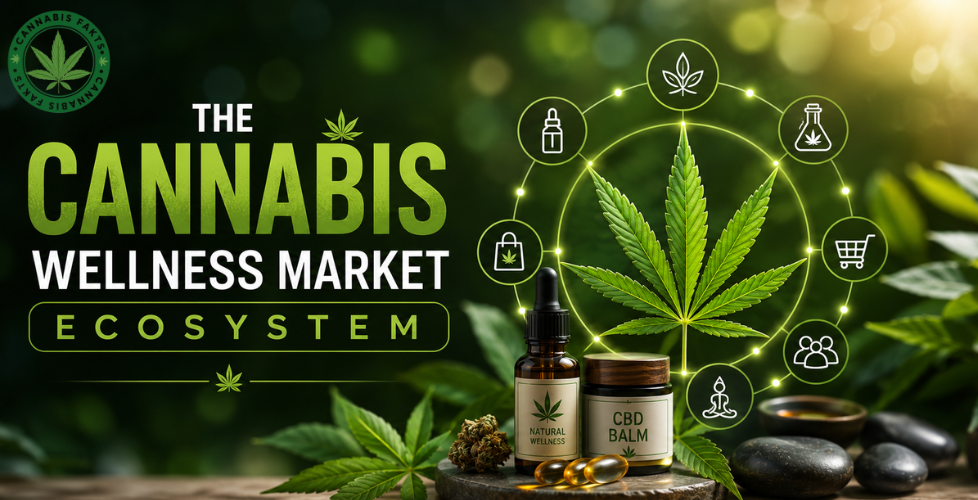
The role of cannabis in lifestyle wellness now spans a remarkably diverse product category:
- Tinctures and capsules — for precise dosing and consistent supplementation
- Topicals and transdermal patches — for localized pain relief and muscle recovery after physical activity
- Edibles and beverages — positioned as alcohol alternatives for social and relaxation contexts
- Inhalation formats — traditional flower and increasingly vaporizers for faster onset
- Sleep-specific formulations — combining CBD with melatonin, adaptogens, and other natural sleep aids
The “California Sober” and Harm-Reduction Culture
A growing cultural movement — often called “California sober” — involves abstaining from alcohol while using cannabis mindfully as an alternative. This movement sits at the intersection of sobriety culture, harm reduction, and the wellness economy, and it speaks directly to the work-life balance question: many adherents describe cannabis as helping them decompress, sleep better, and show up more present at work than they did when alcohol was their primary stress relief mechanism.
Read More: Dating Someone Who Uses Cannabis: What to Know
Expert Viewpoints: A Balanced Perspective
The conversation around the role of cannabis in work-life balance is enriched — and complicated — by a diversity of expert perspectives that do not neatly converge on a single position. This is appropriate for a subject where the science, law, culture, and ethics are all simultaneously in motion.
The Case For: Wellness Advocates and Researchers
Wellness researchers who study cannabis point to its potential as a more physiologically benign stress-management tool than alcohol, particularly when CBD-dominant products are considered. They highlight the endocannabinoid system’s central role in stress regulation and argue that more research funding — not more prohibition — is the responsible path forward.
Employee wellness advocates emphasize the importance of worker autonomy: if a legal activity helps an employee decompress, sleep better, and arrive at work more resilient, the ethical case for employer interference in off-duty choices is increasingly difficult to make.
The Case for Caution: Occupational Health Experts
Occupational health specialists and workplace safety researchers urge caution, particularly around impairment risk, the incomplete evidence base for therapeutic claims, and the disproportionate risk profile for certain worker demographics. NIOSH’s framework explicitly calls for more research before definitive guidance can be issued.
Employers in safety-sensitive industries argue, compellingly, that the normalization of cannabis use creates legitimate operational challenges when reliable impairment testing doesn’t exist in the same way it does for alcohol.
The HR Perspective: Policy in an Age of Complexity
For HR professionals, the role of cannabis in work-life balance represents both a cultural opportunity and a policy challenge. The most forward-thinking HR leaders are moving away from blanket prohibition toward nuanced frameworks that center on performance and safety outcomes rather than the control of off-duty behavior — a shift that mirrors decades of evolution in how employers handle alcohol.
Frequently Asked Questions (FAQs)
Q1: What is the role of cannabis in work-life balance?
Cannabis helps many people manage after-hours stress, anxiety, and sleep disruption. CBD and low-THC products are increasingly used as post-work recovery tools, especially among Millennials and Gen Z dealing with burnout.
Q2: Can cannabis help with workplace burnout?
CBD may ease burnout symptoms like chronic stress and poor sleep, but it can’t fix structural workplace issues. Think of it as a supplemental recovery aid, not a replacement for professional care or organizational change.
Q3: Is cannabis use for stress relief scientifically supported?
Research is promising but not conclusive — a 2024 University of Florida study found 95.3% of patients reported anxiety relief with medical cannabis. However, long-term studies and standardized dosing guidelines are still lacking.
Q4: How is cannabis legalization changing workplace culture?
With legal cannabis in over two-thirds of U.S. states, many employers are moving away from zero-tolerance policies toward impairment-based frameworks. HR teams are increasingly focused on performance outcomes rather than off-duty behavior.
Q5: What are the risks of using cannabis for work-life balance?
Key risks include cognitive impairment near working hours, THC dependency with heavy use, and legal exposure where cannabis remains illegal. Always stay fully off-duty, know your local laws, and consult a healthcare provider if needed.
Q6: What is CBD and how is it different from THC for stress relief?
CBD is non-psychoactive and used for anxiety, sleep, and inflammation without a “high,” while THC is psychoactive and intoxicating. For work-life balance, CBD suits those wanting wellness benefits without impairment; THC is reserved for legal, after-hours use.
Q7: How widespread is cannabis use among working adults in the US?
About 15.9% of full-time workers used cannabis in the past month, and roughly 33% of American adults — around 85 million people — have tried CBD at least once, making it one of the fastest-adopted wellness supplements in U.S. history.
Read More: New Study Explores Cannabis for Relationship Bonding
LEGAL DISCLAIMER: This article is for informational and educational purposes only. It does not constitute medical, legal, or professional advice. Cannabis laws vary by jurisdiction. Consult a qualified healthcare provider and legal professional before making any decisions about cannabis use.
Conclusion
The role of cannabis in work-life balance is not a trend to be dismissed or a solution to be oversold. It is a complex, evolving conversation at the intersection of neuroscience, public health, workplace culture, and personal liberty. What is undeniable is that burnout is real, wellness is a legitimate organizational priority, and the workforce’s relationship with cannabis is changing — whether employers, policymakers, and health systems are ready or not.
The path forward requires honesty: about what cannabis can and cannot do, about the legal realities in your jurisdiction, about the risks alongside the potential benefits, and about the structural changes in workplace culture that no supplement can substitute for.
As legalization expands, research deepens, and generational attitudes continue to shift, one thing is clear: the conversation about cannabis and the modern working life is only just beginning. Stay informed, stay responsible, and make choices grounded in both evidence and self-awareness.