
As cannabis legalization expands across the United States and the world, cannabis and relationships have become one of the most talked-about yet least-understood intersections in modern life. Whether you’re a regular, occasional, or non-cannabis user, this topic can affect you. It also matters when supporting someone who uses cannabis. Ultimately, it can shape how you connect, handle conflict, and communicate.
This comprehensive guide draws on peer-reviewed studies, clinical data, and behavioral research to explain how marijuana shapes—and is shaped by—the intimate relationships in our lives.
Read more: Dating Someone Who Uses Cannabis: What to Know
Table of Contents
- What Is Cannabis?
- Cannabis Use in America: The Relationship Landscape Today
- How the Endocannabinoid System Shapes Relationship Behavior
- Relationship Benefits of Cannabis: What the Research Says
- Challenges Cannabis Creates in Relationships
- Concordant vs. Discordant Cannabis Use: The Compatibility Factor
- Cannabis, Sexual Intimacy, and Physical Connection
- Cannabis, Emotional Availability, and Mental Health in Couples
- Cannabis Use and Intimate Partner Violence: The Complex Link
- Communication Strategies for Cannabis-Related Conversations
- Setting Relationship Boundaries Around Cannabis Use
- When Cannabis Use Becomes a Relationship Problem
- Help, Resources & Therapy for Couples Navigating Cannabis
- A Framework for Moving Forward Together
What Is Cannabis?
Cannabis is a flowering plant from the Cannabis sativa family containing over 100 naturally occurring chemical compounds called cannabinoids. According to the World Health Organization (WHO), cannabis is the most widely used psychoactive substance globally, with an estimated 147 million users worldwide — a number rising steadily alongside expanding legalization.
The two most studied cannabinoids are:
- THC (tetrahydrocannabinol) — the primary psychoactive compound responsible for euphoria, altered perception, relaxation, and the classic “high”
- CBD (cannabidiol) — a non-intoxicating compound associated with anxiety relief, inflammation reduction, and mood support without producing intoxication
Research from NIH StatPearls (2024) notes that average THC potency in cannabis products has increased 3- to 5-fold over the past two decades — making modern cannabis significantly more powerful than what earlier relationship studies examined, and amplifying both its benefits and its risks in partnership dynamics.
Types of CBD: Understanding the Spectrum
Not all CBD products are created equal. Before exploring individual product formats, it’s essential to understand the types of CBD available, as they determine what other compounds are present alongside cannabidiol:
- Full-Spectrum CBD — Contains all naturally occurring cannabinoids, terpenes, and flavonoids including trace amounts of THC (up to 0.3%). Produces what researchers call the “entourage effect,” where multiple compounds work synergistically for enhanced therapeutic benefit
- Broad-Spectrum CBD — Contains multiple cannabinoids and terpenes but with THC removed. Offers some entourage effect benefits without psychoactive risk — a popular choice for partners who want therapeutic effects without intoxication
- CBD Isolate — Pure cannabidiol with all other compounds removed. The most precisely dosed form, preferred by those with sensitivity to THC or those subject to workplace drug testing
Understanding which type of CBD a partner uses helps contextualize their experience and informs more productive conversations about cannabis and relationships.
Read more: Cannabis and Couples: A New Love Language?
Different Forms of Cannabis and CBD Products
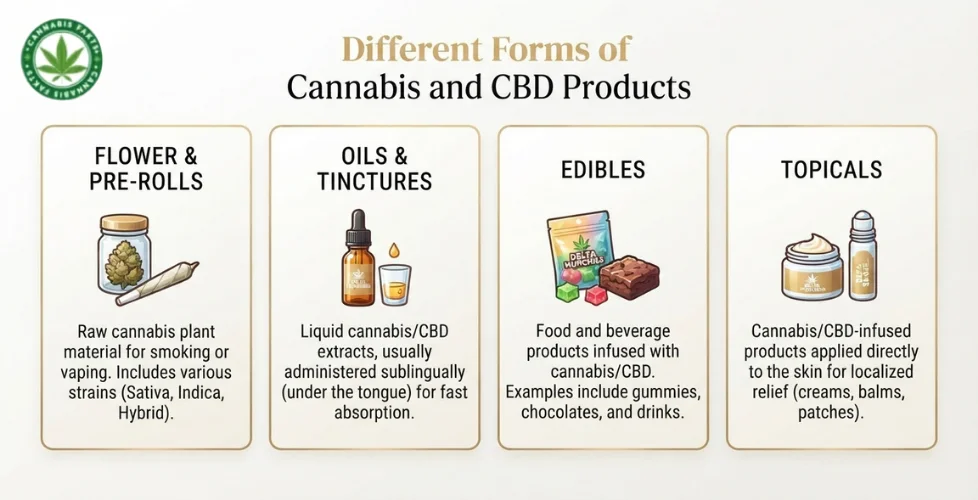
Understanding the different forms of cannabis and CBD products — each varying in potency, onset, and duration — is essential for couples navigating cannabis and relationships with clarity and informed consent.
1. CBD Oil
CBD oil ranks among the most widely used CBD formats. Manufacturers create it by suspending cannabidiol in carrier oils such as hemp seed, MCT coconut, or olive oil. Users typically place it under the tongue for quicker absorption, with effects often beginning within 15–45 minutes.
Many people use CBD oil to manage daily stress, reduce feelings of anxiety, and support sleep. These factors can directly influence a person’s emotional availability within a relationship.
2. CBD Tincture
While often used interchangeably with CBD oil, a CBD tincture is technically an alcohol-based extract, traditionally used in herbal medicine. Modern CBD tinctures often include additional botanicals or flavorings. Like CBD oil, tinctures go under the tongue and provide precise, measurable doses, making them a popular choice for partners managing anxiety or insomnia that may affect relationship quality.
3. CBD Gummies
CBD gummies are among the most popular and accessible CBD products on the market — chewable, pre-dosed, and discreet. The digestive system processes them, so effects typically begin within 30 minutes to 2 hours and last longer than sublingual methods, usually 4–6 hours.
In relationship contexts, people often use gummies for daily anxiety management or sleep support, and they frequently serve as an entry point for cannabis-curious partners who feel hesitant about smoking or vaping.
4. CBD Edibles
Beyond gummies, CBD edibles encompass a broad category of infused food products — chocolates, baked goods, beverages, honey, and more. Like all orally consumed cannabis products, edibles have a delayed and variable onset depending on metabolism, body weight, and whether they are taken with food.
The unpredictability of edible onset is a common source of overconsumption — partners should be aware that what seems like a mild dose can become significantly stronger 90 minutes later, potentially disrupting shared plans or intimate time.
5. CBD Drinks
CBD drinks — including sparkling waters, teas, coffees, and functional beverages infused with cannabidiol — represent one of the fastest-growing cannabis product categories. Water-soluble CBD formulations used in many drinks offer faster onset than traditional edibles (15–30 minutes) due to improved bioavailability.
For couples, CBD drinks offer an attractive social alternative — something that can be shared at a dinner party or date night without the stigma or intoxication associated with THC products, making them a bridge product for mixed-use couples.
6. CBD Capsules
CBD capsules offer a pharmaceutical-style delivery of cannabidiol in precise, consistent doses — similar to taking a daily supplement or vitamin. They are tasteless, convenient, and easy to incorporate into a morning routine. Because they are processed through the digestive system, onset is slower (30–90 minutes), but their consistency makes them popular among individuals using CBD therapeutically for chronic pain, anxiety disorders, or PTSD — conditions that, when well-managed, meaningfully improve emotional and physical availability in relationships.
7. CBD Vape Pens
CBD vape pens are pre-filled, disposable or rechargeable devices that heat CBD-infused oil or distillate to produce an inhalable vapor. Vaping delivers cannabidiol directly to the lungs, producing the fastest onset of any consumption method — effects are typically felt within 2–5 minutes.
This rapid onset makes vape pens popular for acute anxiety relief or situational stress management. However, the CDC has flagged concerns around vaping-associated lung injury (EVALI), particularly with products from unregulated markets — a health risk that partners have a right to discuss openly.
8. CBD Cartridges
CBD cartridges are refillable or replaceable vape tank attachments pre-loaded with CBD oil or distillate, used with a compatible battery device. They offer more customization than disposable vape pens — users can select specific formulations, CBD-to-terpene ratios, and cannabinoid profiles.
In relationship contexts, cartridges are a discreet and odor-minimal format that some partners may use without the other’s awareness — underscoring the importance of honest, ongoing communication about cannabis use habits.
9. CBD Flower
CBD flower is the raw, dried bud of hemp plants selectively bred to be high in CBD and low in THC (below 0.3%). It looks, smells, and is consumed identically to traditional THC-dominant cannabis — smoked or vaporized — but produces no significant psychoactive effect. CBD flower is favored by former smokers who find ritual comfort in the act of smoking, and by those who want the full-spectrum benefits of the whole plant without intoxication.
For non-using partners, the visual similarity to THC cannabis can sometimes be a source of confusion or discomfort — making clear communication about what exactly is being used particularly important.
10. CBD Topicals
CBD topicals — including creams, balms, salves, massage oils, and intimacy lubricants — are applied directly to the skin and do not enter the bloodstream in meaningful quantities, meaning they produce no psychoactive effect whatsoever. They work locally through skin-surface cannabinoid receptors to reduce inflammation, soreness, and tension.
In relationship contexts, CBD topicals have gained significant traction in the sexual wellness space — CBD-infused lubricants and massage oils are increasingly used by couples to enhance physical intimacy, reduce discomfort, and create a shared, intentional wellness ritual. This makes topicals one of the most relationship-friendly CBD formats available.
Read more: How Cannabis Shapes Young Relationships in the US
Why the Form of Cannabis Matters in Relationships
The form a partner uses shapes the relationship impact entirely. A partner who takes a CBD capsule each morning for anxiety presents a vastly different dynamic than one who uses high-THC concentrates throughout the day. A couple who shares CBD drinks on a date night is having a fundamentally different experience than one navigating concealed vape pen use.
Understanding what your partner consumes — not just that they consume cannabis — is the more informed, compassionate, and productive starting point for any honest conversation about cannabis and relationships.
Cannabis Use in America: The Relationship Landscape Today
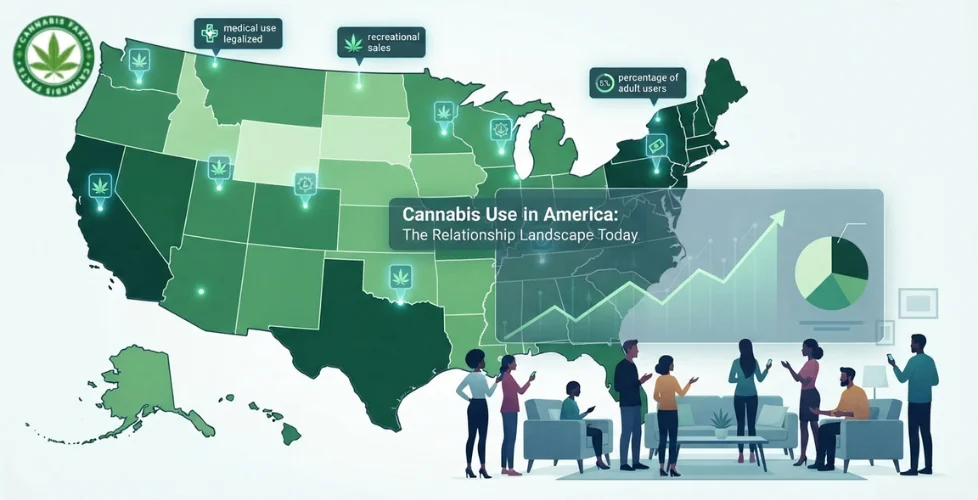
The numbers are striking. According to the National Institutes of Health (NIH), approximately 19.2 million Americans met diagnostic criteria for past-year cannabis use disorder in 2023, with the highest prevalence — 16.6% — among adults aged 18 to 25. Cannabis is now the fourth most commonly used psychoactive substance worldwide, trailing only alcohol, caffeine, and tobacco.
This normalization is not without consequence for relationships. As of 2024, the CDC reports that 47 states, the District of Columbia, and 3 territories permit some form of medical cannabis use, and 24 states have fully legalized adult-use cannabis. In this environment, cannabis and relationships is no longer a niche concern — it’s a mainstream conversation happening in living rooms, therapists’ offices, and couples’ retreats across the country.
Whether cannabis is used recreationally, medically, or habitually, it occupies space in a relationship. The question isn’t whether cannabis and relationships interact — it’s how they interact, and whether those interactions are understood, agreed upon, and managed openly.
Short-Term Behavioral Effects Relevant to Relationships
The way cannabis affects behavior in the short term directly ripples into how we relate to our partners:
- Relaxation and anxiety reduction — making social or emotional interactions feel less threatening for some users
- Heightened sensory perception — touch, music, and food feel more vivid
- Altered time perception — minutes may feel like hours
- Reduced inhibitions — which can open up emotional conversations, or lead to poor decisions
- Short-term memory impairment — important conversations during intoxication may not be retained
- Emotional amplification — both positive and negative emotions can feel more intense
Long-Term Effects on Relationship Behavior
Chronic heavy use presents a different picture. Long-term cannabis use has been associated with a motivation syndrome, cognitive changes in memory and executive function, and — as a 2024/2025 updated meta-analysis in PMC confirms — a meaningful link between cannabis and depression risk. The causality debate continues, but the correlation is increasingly hard to dismiss.
Relationship Benefits of Cannabis: What the Research Says
Despite its complexities, research does support genuine benefits of cannabis in relationship contexts — especially when use is moderate, intentional, and mutually understood.
1 Stress Relief That Spills Into the Relationship
Chronic stress is one of the leading causes of relationship deterioration — it fuels irritability, withdrawal, and conflict. PMC research on the endocannabinoid system and stress regulation confirms that the ECS is “a critical stress response system” — and that manipulating it appropriately may reduce the neurological burden of stress. For moderate cannabis users, this translates into a more relaxed, emotionally available version of themselves that partners often describe as easier to connect with.
Importantly, a 2024 systematic review on CBD and anxiety found that CBD’s pharmacological mechanism — partial agonism of 5-HT1A serotonin receptors — is scientifically plausible for anxiolytic effects. This means that low-THC, CBD-dominant cannabis products may offer stress relief without the intoxication that can complicate relationship dynamics.
2 Shared Rituals and Bonding Activities
Behavioral research on couples consistently finds that shared activities and rituals are a cornerstone of relationship satisfaction. According to research on dyadic cannabis use published in ScienceDirect (2024), “concordant substance use may enhance relationship satisfaction and outcomes by fostering shared values and positive experiences.” When both partners use cannabis together intentionally — as a sunset ritual, a creative outlet, or a weekend decompression — it can function similarly to other shared leisure activities in strengthening their bond.
3 Pain Management and Relationship Presence
For partners managing chronic pain, PTSD, anxiety disorders, or insomnia, cannabis can serve as a genuine therapeutic tool. When these conditions are well-managed, individuals are more emotionally available, energetic, and capable of intimacy. In this framing, cannabis doesn’t undermine the relationship — it enables fuller participation in it. The NIH’s research on the ECS in PTSD contexts specifically notes the disruption of endocannabinoid signaling following traumatic stress, providing a biological rationale for why some trauma survivors turn to cannabis for relief.
4 Humor, Playfulness, and Emotional Openness
Many cannabis users and their partners report that moderate use introduces more levity, creativity, and emotional openness into their relationship. Playfulness — the capacity to be silly, spontaneous, and non-serious with a partner — is a significant predictor of relationship satisfaction in the literature. While this benefit is difficult to quantify in studies, it is a recurring theme in qualitative research on cannabis-using couples.
Read more: The Ultimate Guide to Mood-Enhancing Cannabis Gummies
Challenges Cannabis Creates in Relationships
For all the potential benefits, the challenges cannabis can introduce into relationships are equally real — and deserve unflinching honesty.
1 Communication Breakdown and Emotional Disconnection
One of the most common complaints from non-using partners or partners of heavy users is a feeling of emotional disconnection. When one partner is frequently intoxicated, important conversations may not be retained, emotional responses may be blunted, and the sense of “being present” with a partner — which is foundational to intimacy — erodes over time.
A 2024 study on dyadic cannabis use and relationship satisfaction (ScienceDirect) found that heavy cannabis users who combined cannabis and alcohol reported lower next-day relationship satisfaction — a finding that highlights how the manner of use matters as much as the fact of use itself.
2 Financial Stress and Household Conflict
Cannabis is not inexpensive, particularly in regulated adult-use markets. When cannabis spending competes with household budgets, emergency savings, or family needs, it triggers financial stress — one of the most reliably documented sources of relationship conflict. Undisclosed cannabis spending, or spending that exceeds what was agreed upon, introduces an element of dishonesty that can damage trust far beyond the financial issue itself.
3 Parenting Disagreements and Family Values Conflict
When children are in the picture, cannabis becomes significantly more charged. Partners may disagree sharply on whether cannabis use is appropriate around children, what messages it sends, how to discuss it with kids, and what the safety and storage responsibilities are. These arguments often function as proxy battles for deeper value differences about parenting philosophy, health, and family identity.
4 Amotivation and Imbalanced Domestic Labor
Heavy cannabis use is associated with what researchers call amotivation syndrome — a pattern of reduced drive, goal-seeking, and initiative. When one partner experiences this, the other frequently absorbs disproportionate domestic, professional, and social responsibilities. Over time, this imbalance generates resentment that compounds independently of the cannabis question.
5 Trust Erosion Through Concealment
If a partner hides their cannabis use, underreports its frequency, or lies about spending, the relationship faces a trust deficit that transcends the substance itself. Concealment signals that the couple has not yet established the emotional safety required for honest conversation — and addressing that gap is often more important than any specific cannabis policy.
How the Endocannabinoid System Shapes Relationship Behavior
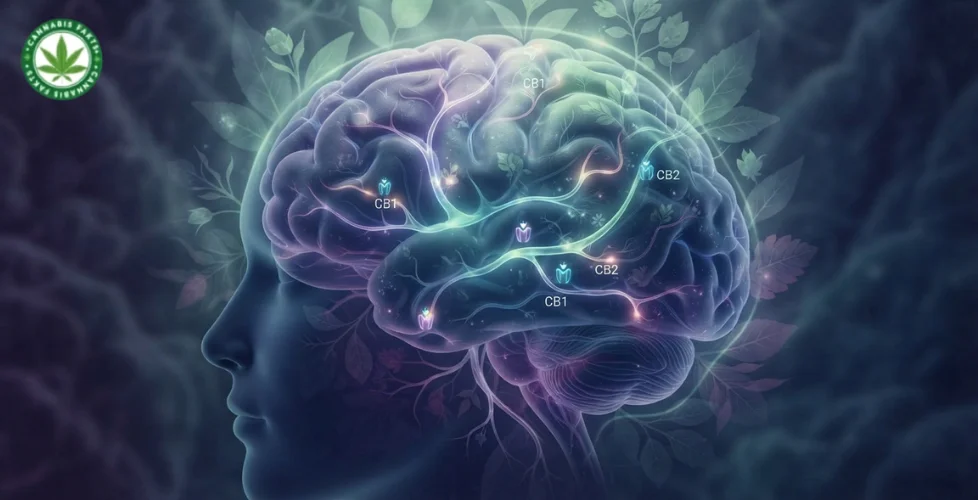
To understand how cannabis affects relationships, you first need to understand the biology behind it. The foundation is the endocannabinoid system (ECS) — a cell-signaling network distributed throughout the brain, immune system, and peripheral nervous system that regulates mood, memory, pain, sleep, appetite, and stress response.
Research published in PMC (2023) confirms that the ECS plays a critical role in both depression and anxiety — two conditions that significantly affect relationship quality. The ECS operates through two primary endogenous cannabinoids: anandamide (AEA) and 2-arachidonoylglycerol (2-AG), both of which interact with CB1 and CB2 receptors throughout the brain.
When you consume cannabis, THC (tetrahydrocannabinol) — the primary psychoactive compound — binds to these same CB1 receptors, mimicking and amplifying the actions of your body’s own endocannabinoids. According to neurobiological research from PubMed, stress exposure reliably causes a downregulation of CB1 receptors, meaning chronic stress literally depletes your brain’s capacity for calm. For some cannabis users, THC use is an attempt — consciously or not — to restore that balance.
CBD (cannabidiol), the non-intoxicating compound, works differently. A 2024 systematic review covering 11 randomized controlled trials found that CBD may reduce anxiety versus placebo — though results were inconsistent across disorder types and dosage levels, reflecting the complexity of cannabis science.
Concordant vs. Discordant Cannabis Use: The Compatibility Factor
One of the most important and research-supported dimensions of cannabis and relationships is the concept of concordant versus discordant use — a factor that turns out to be a powerful predictor of relationship quality.
Research published in Drug and Alcohol Dependence (ScienceDirect, 2025) examined 110 couples and found that discrepancies in cannabis use intensity were negatively associated with general relationship satisfaction (β = −.19, p = .008) and with the quality of sex (β = −.16, p = .02). In other words, the bigger the gap between how much each partner uses, the lower the reported relationship quality.
A large 2023 study from SAGE Journals (Tucker et al.) followed 1,214 emerging adults in committed relationships through 2020–2021. It identified four patterns of couples’ substance use: concordant infrequent use (81.9%), near-daily partner cannabis use (6%), near-daily respondent cannabis use (6.5%), and concordant moderate alcohol plus near-daily cannabis use (5.5%). Crucially, respondents with concordant infrequent use had significantly higher well-being than those in concordant heavier-use couples.
Why Concordance Matters
According to the ScienceDirect dyadic diary study (2024), concordant substance use is thought to enhance relationship satisfaction by “fostering shared values and positive experiences.” Shared leisure activities, shared world-views, and parallel lifestyle choices all predict relationship investment and longevity. When one partner uses cannabis daily and the other never does, those aligned experiences are harder to build.
The Gender Dimension
A 2025 study from Ariel University researchers (Marijuana Moment) found a notable gender difference: women who used cannabis at high intensity reported greater romantic relationship satisfaction and perceived partner responsiveness. Men who used at high intensity reported lower satisfaction. The researchers acknowledged these findings warrant further study in larger samples, but they underscore that cannabis effects on relationships are not uniform — they’re filtered through gender, biology, and relationship context.
Strategies for Mixed-Use Couples
Mixed-use couples — where one partner uses cannabis and the other doesn’t — are the most common pattern and can absolutely thrive with the right approach:
- Establish where, when, and in what contexts use is acceptable for both partners
- Maintain sober shared activities that don’t involve cannabis, to preserve connection in unaltered states
- Avoid social settings where only one partner uses, unless both are genuinely comfortable
- Revisit the arrangement periodically — comfort levels change over time and deserve regular conversation
Read more: Marijuana Use Isn’t a Dating Red Flag, Survey Finds
Cannabis, Sexual Intimacy, and Physical Connection
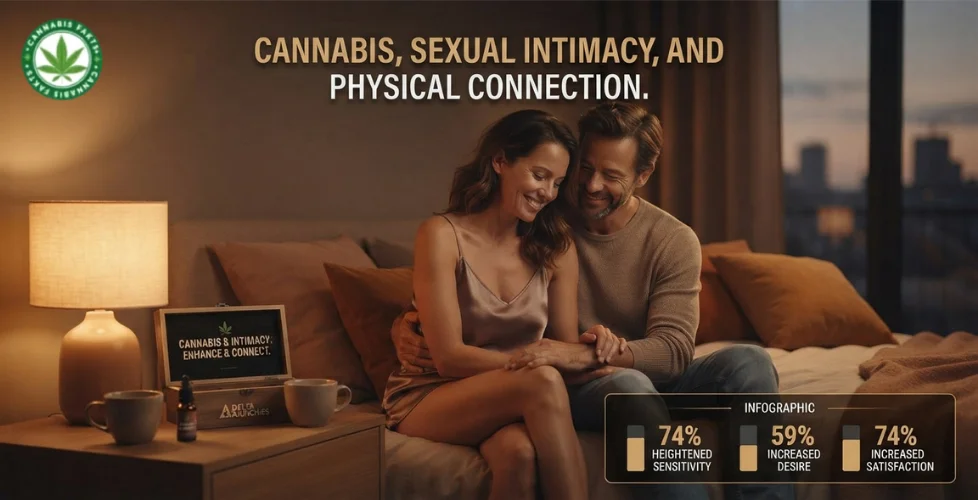
Few topics sit at the intersection of cannabis and relationships more provocatively — or more productively — than sexual intimacy. Research here is both compelling and nuanced.
Cannabis may work as a sexual enhancer through:
- Reducing performance anxiety — by quieting the mind and reducing inhibition
- Heightening touch sensitivity — making physical sensations more vivid
- Promoting emotional openness — facilitating vulnerability and presence
- Slowing the perception of time — making encounters feel longer and more expansive
What the Data Shows on Cannabis and Sexual Satisfaction
A landmark survey of 202 adults published in the Journal of Sexual Medicine (2019) found that among participants who used cannabis before sex:
- 73.8% reported increased sexual satisfaction
- 58.9% said cannabis increased their desire for sex (libido)
- 74.3% reported heightened sensitivity to touch
A separate Stanford University School of Medicine study found that frequent cannabis users report approximately 20% more sexual frequency than non-users — though correlation doesn’t establish causation.
A 2023 study in the Journal of Cannabis Research specifically examined cannabis’s influence on sexual functioning across Kaplan’s and Masters & Johnson’s sexual response cycles — desire, excitement, plateau, orgasm, and resolution — and found implications for treating sexual dysfunctions, especially in women.
The Journal of Sexual Medicine (2020) offers an important nuance: acute, low-dose cannabis may enhance desire and sexual enjoyment, while chronic high-dose use is associated with negative effects including lack of sexual interest, erectile dysfunction, and inhibited orgasm. Dose, frequency, and individual biology all determine which side of that equation a person lands on.
Cannabis and Male Sexual Health
Research published in the Journal of Sexual Medicine on male sexual health found that cannabis may have peripheral antagonizing effects on erectile function by stimulating specific receptors in penile tissue. This is a meaningful concern for men who use cannabis heavily — and one that often goes unspoken in relationships where cannabis is normalized.
CBD, Topical Products, and Intimacy
For those seeking cannabis’s anxiety-reducing benefits without psychoactive effects, CBD-dominant products have demonstrated anxiolytic properties that can reduce performance anxiety in sexual contexts.
Not all cannabis experiences are positive in the bedroom. Common challenges include:
- Anxiety and paranoia — particularly with high-THC strains or in individuals prone to anxiety
- Erectile dysfunction — some research links heavy cannabis use to sexual dysfunction in men
- Reduced lubrication — some users report dryness as a side effect
- Dissociation — feeling “too high” can make emotional connection difficult
- Dependence on cannabis for arousal — some users find they struggle to enjoy sex without it
Consent, Intoxication, and Intimacy
An important and often overlooked point: cannabis impairs judgment. Both partners must be clear-headed enough to give enthusiastic, informed consent to sexual activity. Mutual agreement to use cannabis before intimacy is a conversation that should happen outside the moment, not within it.
Cannabis, Emotional Availability, and Mental Health in Couples
Relationship quality is inseparable from individual mental health, and cannabis has a complex, bidirectional relationship with mental wellness that directly affects partnership dynamics.
Cannabis and Anxiety in Relationships
A critical review published in Medical Cannabis and Cannabinoids (2024) concluded that “the association between cannabis and anxiety is best explained by anxiety predisposing individuals toward cannabis use as a method of self-medication.” This is a crucial insight for couples: if your partner uses cannabis primarily to manage anxiety, the underlying anxiety — not the cannabis — is the deeper relationship issue. Treating only the symptom without addressing the cause rarely produces lasting change.
Cannabis and Depression: An Updated Picture
The 2024/2025 systematic review and meta-analysis on cannabis and depression (PMC) provides an updated look at the longitudinal relationship between cannabis use and depressive symptoms. The research confirms meaningful associations while acknowledging ongoing debate about directionality. For partners of individuals showing depressive symptoms alongside heavy cannabis use, this link warrants honest, compassionate conversation — not blame, but acknowledgment.
Emotional Blunting and the “Checked Out” Partner
One of the most commonly described experiences in couples where one partner uses cannabis heavily is a sense that the using partner is emotionally “checked out” — present physically but absent emotionally. This is consistent with research on cannabis’s effects on the prefrontal cortex, the region most responsible for emotional regulation, empathy, and executive function. Heavy cannabis use over time can reduce the brain’s capacity for the nuanced emotional responsiveness that deep relationships require.
Cannabis Use and Intimate Partner Violence: The Complex Link
This is among the most sensitive and misunderstood areas in the cannabis and relationships research landscape.
The Research Is Nuanced — Not Simple
A PubMed study examining cannabis use and intimate partner violence (IPV) found a well-established link between substance use and IPV — but cannabis’s role specifically is complicated. A nationally representative longitudinal study in the Journal of Interpersonal Violence found that consistent marijuana use during adolescence was most predictive of IPV perpetration in early adulthood (OR = 2.08, p < .001) — suggesting early use patterns, not adult use per se, may be the primary driver.
Contrastingly, research cited in NBC News found that cannabis-using couples may actually show lower rates of domestic violence, with investigators suggesting that cannabis may not increase and may even decrease aggressive conflict. The researchers called for replication and cautioned against drawing strong conclusions.
What Complicates the Picture
A ScienceDirect study on cannabis and IPV in urban emergency departments found that co-use of cannabis and alcohol — not cannabis alone — produced the most elevated IPV risk profiles. Research on substance use disorders and IPV perpetration (PubMed) confirmed that comorbid alcohol use diagnosis increased the likelihood of IPV among participants with cannabis use disorder. In other words, it’s frequently the combination of substances, underlying personality factors, and socioeconomic stressors — not cannabis in isolation — driving violence risk.
The takeaway: cannabis in moderation, in healthy relationships, does not appear to increase conflict. Heavy cannabis use combined with alcohol use, untreated mental health conditions, and pre-existing relationship dysfunction is where risk elevates substantially.
Communication Strategies for Cannabis-Related Conversations
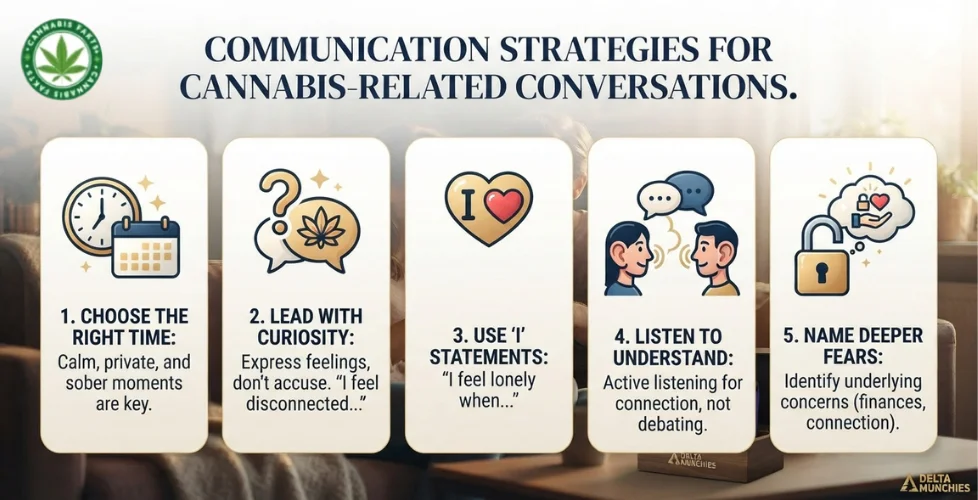
Communication is the most powerful tool any couple has for navigating cannabis in relationships. These conversations can be charged, but with the right approach, they become opportunities for genuine connection rather than battlegrounds.
Read more: CBD for Sex Drive in Females: A Guide to Natural Sexual Wellness
1. Choose the Right Time and Context
Never initiate serious cannabis-related conversations mid-argument, or while one partner is intoxicated. Choose a calm, private, sober moment — a weekend walk, a quiet evening, or a scheduled relationship check-in. The setting signals that the conversation is important but safe.
2. Lead with Curiosity, Not Accusation
Accusation invites defensiveness. Curiosity invites disclosure.
- Instead of: “You’re always stoned and you never want to do anything.”
- Try: “I’ve been feeling a little disconnected lately. Can we talk about what’s going on for both of us?”
This framing keeps the focus on the relationship, not the substance.
3. Use “I” Statements Grounded in Specific Feelings
“I” statements communicate impact without assigning blame:
- “I feel lonely when cannabis is part of every evening we spend together.”
- “I worry about our budget when I see how much we spend on cannabis each month.”
- “I sometimes feel like I lose you when you’re high, and I miss feeling connected.”
These statements invite empathy rather than triggering shame cycles.
4. Listen to Understand — Not to Win
Research in couples therapy consistently shows that active listening — not reactive debating — is the single most powerful communication skill for resolving conflict, and when it comes to cannabis-related conversations, practicing the discipline of listening to understand rather than listening to win can be the difference between a conversation that deepens your connection and one that drives you further apart.
5. Name the Deeper Fear
Conversations about cannabis are often conversations about something else — fear of being left behind, fear of financial insecurity, fear of your partner changing into someone you don’t recognize. When you can name those deeper fears, you give your partner something real to respond to. This is where the most productive conversations happen.
6. Don’t Moralize
Unless use has caused demonstrable harm, avoid framing cannabis as a character flaw. Shame rarely motivates change — it typically produces hiding, resentment, or performative compliance followed by relapse. Approach the conversation from a place of shared concern for the relationship, not moral judgment of the person.
7. Agree on Shared Values Before Negotiating Behaviors
Before debating specifics, establish what you both care about. Most partners agree on: We both want to feel connected. We both want to feel respected. We both want our relationship to be a safe, honest place. Starting from shared values creates the context in which specific behavioral agreements can actually stick.
Setting Relationship Boundaries Around Cannabis Use
Healthy boundaries in the context of cannabis and relationships are not about control — they are about creating a shared environment in which both partners feel secure, respected, and genuinely heard. Effective boundaries are collaborative, specific, and revisable.
Categories of Boundaries Worth Discussing
Establishing clear, research-backed Categories of Boundaries Worth Discussing is one of the most effective ways couples can navigate cannabis use without compromising trust, intimacy, or shared goals.
Spatial and environmental:
- Is cannabis use permitted in shared living spaces, the bedroom, the car?
- Is there a designated outdoor or separate space for use?
- How is cannabis stored safely, especially with children in the home?
Social and public:
- Will cannabis be present at family gatherings, social events, or professional settings?
- How will you handle situations where guests or family members are uncomfortable?
Financial:
- Is there a monthly cannabis budget that both partners agree to?
- Are cannabis purchases disclosed in shared financial tracking?
Parenting:
- What are the rules about using cannabis while actively parenting?
- How will you discuss cannabis with your children as they grow?
Relational and temporal:
- Are there relationship spaces — date nights, important conversations, intimacy — that are kept cannabis-free by mutual agreement?
- Are there cannabis-free days or windows built into the week?
How to Reach Agreements Without Ultimatums
Research shows that ultimatums like “stop using or I’m leaving” rarely resolve the root issue — according to Gottman Institute couples research, they more often breed resentment than real change; a collaborative, boundary-based approach to cannabis and relationships is far more effective and lasting.
- Share your specific needs clearly and without judgment
- Invite your partner to share their needs and perspective
- Look for workable overlap and genuine compromise
- Agree on specific, observable behaviors — not vague intentions
- Build in a scheduled review (“Let’s revisit this in 30 days”)
The goal is a living agreement that evolves with your relationship, not a one-time ruling that entrenches both parties.
When Cannabis Use Becomes a Relationship Problem
Understanding when cannabis has shifted from a lifestyle choice to a relationship problem is critical — and often requires honest acknowledgment from both partners.
Diagnostic Reality: Cannabis Use Disorder
According to NIH StatPearls (2024), approximately 6.8% (19.2 million Americans) met criteria for past-year cannabis use disorder (CUD) in 2023 — with prevalence highest among young adults. CUD is a recognized DSM-5 diagnosis defined by problematic cannabis use leading to clinically significant impairment or distress. A JAMA study on CUD prevalence in legal-use states found that 21.3% of cannabis users in legal markets met criteria for any CUD — a striking figure that challenges the assumption that legal cannabis is uniformly safe.
Warning Signs in the Using Partner
- Using cannabis to cope with every difficult emotion rather than processing feelings
- Hiding or downplaying use frequency or spending
- Continuing use despite repeated, clear expressions of concern from a partner
- Prioritizing cannabis over relationship activities, work responsibilities, or intimacy
- Becoming irritable, anxious, or unable to function without cannabis
- Using cannabis as the primary — or only — social or relaxation activity
Read more: CBD for PMS Mood Swings: Natural Relief for Hormonal Imbalance
Warning Signs in the Concerned Partner
- Constant monitoring and tracking of the partner’s cannabis use
- Covering up for the partner’s cannabis-related behaviors to others
- Feeling like cannabis is their primary competition for the partner’s attention
- Persistent anxiety, loneliness, or resentment as a baseline emotional state
- Feeling disrespected, dismissed, or gaslit when concerns are raised
The presence of multiple warning signs from either list suggests that the relationship has moved past the territory where open conversation alone will be sufficient — professional support becomes important.
Help, Resources & Therapy for Couples Navigating Cannabis
Acknowledging the need for outside support is not a sign of failure — it’s a sign of commitment to the relationship and to each other.
Couples Therapy
A skilled couples therapist creates a structured, safe space to address cannabis-related relationship concerns before they escalate into conflict — with evidence-based modalities like Emotionally Focused Therapy (EFT), Gottman Method, and Behavioral Couples Therapy (BCT) proven to improve both relationship quality and substance use outcomes simultaneously.
- Emotionally Focused Therapy (EFT) — which addresses the emotional attachment patterns underlying relationship conflict
- Gottman Method Couples Therapy — which uses research-backed communication and conflict resolution tools
- Behavioral Couples Therapy (BCT) — specifically developed for couples where substance use is a factor and shown to improve both sobriety outcomes and relationship quality
Individual Therapy
The using partner may benefit from individual therapy to explore what needs cannabis is meeting — whether that’s stress management, social anxiety, boredom, or unprocessed trauma. The concerned partner may benefit from exploring their communication patterns, co-dependency tendencies, and boundary-setting skills independently.
12-Step and Peer Support Programs
- Marijuana Anonymous (MA) — a free 12-step peer support program founded in 1989 and modeled on AA’s framework, focused specifically on cannabis addiction and recovery
- SMART Recovery — a science-based, non-12-step alternative using a 4-Point Program that includes motivational tools, cognitive-behavioral techniques, and peer support without spiritual requirements
Crisis and Clinical Resources
- SAMHSA National Helpline — 1-800-662-4357, free, confidential, 24/7 treatment referral service
- Cognitive-Behavioral Therapy (CBT) — one of the most evidence-supported treatments for cannabis use disorder, available through licensed therapists and outpatient programs
- Addiction psychiatry consultations — particularly relevant when cannabis use co-occurs with mood disorders, anxiety, or PTSD
A Framework for Moving Forward Together
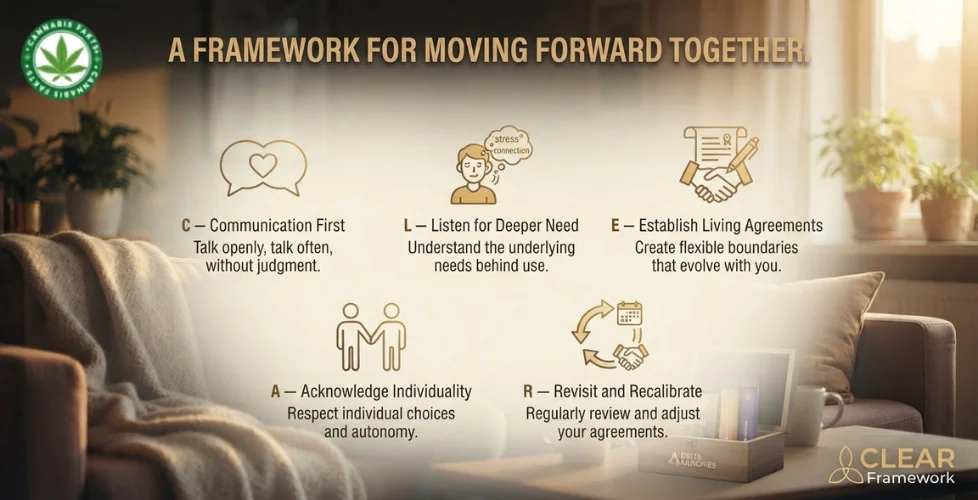
As cannabis becomes more mainstream, open and honest communication can help couples better understand each other. Respecting individual choices and setting clear boundaries can also help protect a healthy relationship.
The CLEAR Framework for Cannabis and Relationships
- C — Communication First: No assumption, no silence. Talk early, talk often, and talk without judgment. The couple that can have honest conversations about cannabis can have honest conversations about almost anything.
- L — Listen for the Deeper Need: Cannabis is often a symptom of something else — stress, anxiety, disconnection, boredom, or pain. Listen for what your partner is actually trying to meet, and approach that need with compassion.
- E — Establish Living Agreements: Boundaries are not ultimatums. They are collaborative, specific, and revisable. Build agreements that reflect both partners’ needs and review them as the relationship evolves.
- A — Acknowledge Individuality: Both partners are autonomous people with their own histories, values, and choices. You can express your needs without attempting to control another person’s decisions. Respect is the foundation, not compliance.
- R — Revisit and Recalibrate: Relationships change. Cannabis use patterns change. What worked six months ago may need to be renegotiated today. Commit to ongoing conversation rather than one-time rulings.
Read more: Does CBD Show Up on Drug Tests? A Complete Guide to CBD
Questions Every Couple Should Discuss
If cannabis is part of your relationship — or could be — these questions are worth working through together:
- How does cannabis use affect each of us emotionally, physically, and sexually?
- Are there contexts where use feels comfortable, and others where it doesn’t?
- Do we have financial agreements around cannabis spending?
- How do we want to talk about cannabis with our children, or how will we if the time comes?
- Does either of us feel like cannabis is receiving more energy or attention than the relationship?
- Is our emotional and physical intimacy thriving, or is cannabis a contributing factor to any challenges?
- If cannabis use changed — increased or decreased — how would that affect us?
Conclusion
Cannabis and relationships are not inherently in conflict — but they do require the same things every relationship challenge requires: honesty, empathy, communication, and a willingness to prioritize the partnership over individual habits or defenses.
The research is clear that concordant, moderate cannabis use between partners can coexist with high relationship satisfaction. It’s equally clear that discordant use, heavy use, concealed use, and use driven by unaddressed mental health needs all carry meaningful risks to relationship quality.
The difference, in almost every case, comes down to one thing: the quality of the conversation surrounding cannabis. Couples who can speak openly — about needs, fears, values, and limits — don’t just survive the cannabis question. They use it as an opportunity to get to know each other more deeply.
That kind of conversation is always worth having.
Disclaimer: This blog post is for informational purposes only and does not constitute medical, legal, or therapeutic advice. Cannabis laws vary by jurisdiction. If you or a partner are experiencing challenges related to cannabis use or relationship health. Please consult a qualified licensed therapist, addiction counselor, or healthcare professional.
Key Sources & Further Reading
- Tucker et al. (2023) — Cannabis Use in Romantic Relationships, SAGE Journals
- Dyadic Cannabis Use and Relationship Satisfaction — ScienceDirect (2024)
- Cannabis Use Intensity and Relationship Quality — ScienceDirect (2025)
- How Cannabis Alters Sexual Experience — Journal of Sexual Medicine (2019)
- Cannabis Use Disorder — NIH StatPearls (2024)
- Cannabis Use Disorder — CDC
- Endocannabinoid System & Depression/Anxiety — PMC (2023)
- Cannabis & Intimate Partner Violence — PubMed
- Marijuana Anonymous
- SMART Recovery — Marijuana Addiction
- SAMHSA 2024 National Survey on Drug Use and Health