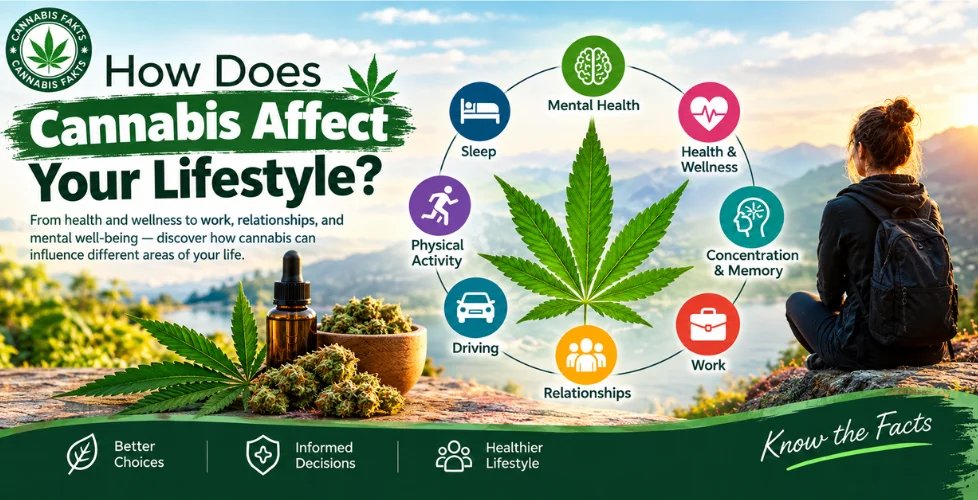
Cannabis has become an increasingly discussed part of modern health, wellness, medicine, recreation, and social life. But beyond the question of whether cannabis is “good” or “bad,” an important question is: How does cannabis affect your lifestyle?The answer depends on several factors, including how often someone uses cannabis, the amount and concentration of THC, the method of consumption, age, individual health, and whether cannabis is combined with alcohol or other substances. The Cannabis effect can influence areas of everyday life such as concentration, memory, sleep, work, relationships, driving, physical activity, and mental health.
Scientific research also shows that cannabis does not affect everyone in exactly the same way. Some effects can occur shortly after people use cannabis, while frequent or heavy use can increase other risks. The National Academies of Sciences, Engineering, and Medicine highlights considerable differences in the evidence depending on the health outcome researchers study. This article examines how cannabis affects different areas of lifestyle using evidence from public-health agencies and scientific reviews..
What Is the Cannabis Effect?
The term Cannabis effect refers broadly to the physical, psychological, cognitive, and behavioral changes associated with cannabis use.The primary psychoactive compound in cannabis is delta-9-tetrahydrocannabinol, commonly called THC. THC interacts with cannabinoid receptors in the brain and body, producing effects that may include altered perception, relaxation, changes in mood, impaired coordination, and changes in attention and memory.
Cannabidiol (CBD) is another major cannabinoid, but unlike THC, it does not produce the same intoxicating “high.”The effects of cannabis can vary considerably from person to person. Product potency, route of administration, frequency of use, previous experience, and individual biology can all influence the outcome.The CDC’s overview of cannabis health effects notes that cannabis can affect both the brain and body and that risks can vary depending on how cannabis is used.
How Cannabis Can Affect Daily Life
For occasional users, cannabis may affect them mainly during and shortly after consumption. For frequent users, cannabis may become part of their daily routines and influence their work, school, relationships, exercise, sleep, and other lifestyle choices. Most importantly, people should not assume that cannabis affects everyone in the same way.The same substance may produce different experiences in different people.Here are some of the major areas where the Cannabis effect can become relevant.
Cannabis and Brain Function
One of the clearest short-term effects of THC is its influence on brain functions involved in attention, memory, coordination, decision-making, and reaction time.According to the CDC’s research on cannabis and brain health, recent cannabis use can affect thinking, attention, memory, coordination, movement, and perception of time.These effects can matter in everyday situations.
For example, someone who uses cannabis shortly before studying may experience changes in concentration or short-term memory. Similarly, someone using cannabis before operating equipment or performing a complex task may have impaired coordination or slower reactions.The potential impact is particularly important for adolescents and young adults because the brain continues developing into approximately the mid-20s.
Why This Matters for Lifestyle
If cannabis use regularly interferes with:
- CDC — Cannabis Health Effects
- CDC — Cannabis and Brain Health
- CDC — Cannabis and Pregnancy
- WHO — Cannabis: Health and Social Effects
- CDC — Cannabis and Mental Health
- CDC — Cannabis and Driving
- WHO — 2026 Technical Brief on Nonmedical Cannabis Use
then its effect extends beyond temporary intoxication and becomes a lifestyle consideration.
Cannabis and Work or School
Work and education require attention, memory, decision-making, reliability, and coordination. Cannabis can temporarily affect several of these functions.Using cannabis before work or school may therefore create practical problems, particularly when the activity requires sustained concentration or operating machinery.
The relationship between cannabis and long-term employment outcomes is more complicated because employment is influenced by many factors. Cannabis use alone cannot explain whether someone succeeds or struggles professionally.However, frequent use that contributes to missed responsibilities, reduced concentration, absenteeism, or dependence can potentially interfere with normal routines.
The CDC information on cannabis use disorder identifies continuing cannabis use despite problems at work, school, home, or in relationships as one sign of cannabis use disorder.This distinction is important: using cannabis and experiencing a cannabis-related lifestyle problem are not automatically the same thing.
Cannabis and Driving
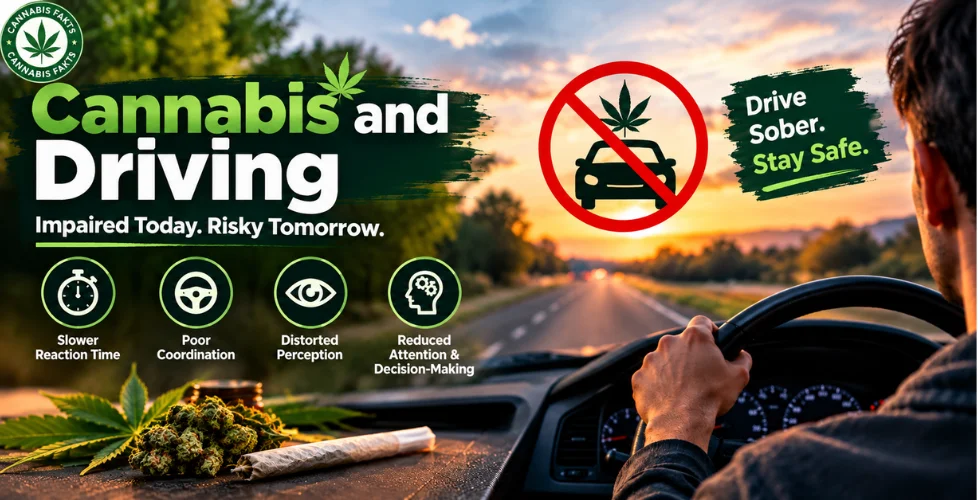
Driving is one area where the short-term Cannabis effect has particularly important safety implications.Cannabis can affect reaction time, coordination, perception, attention, and decision-making. These are all skills required for safe driving.The CDC’s cannabis and driving research states that cannabis can slow reaction time and decision-making, impair coordination, and distort perception. Research also shows an association between acute cannabis use and motor-vehicle crashes.Combining cannabis with alcohol can increase impairment.
For this reason, using cannabis and then driving is a significant safety concern. A person may feel capable of driving while still experiencing measurable impairment.A safer approach is to avoid driving after using cannabis and arrange an alternative form of transportation.
Cannabis and Mental Health
The relationship between cannabis and mental health is complex.Some people report relaxation or temporary changes in mood after using cannabis. However, cannabis can also produce unpleasant psychological effects, including anxiety, paranoia, and disorientation.
According to the CDC’s cannabis and mental-health evidence, cannabis use is associated with an increased risk of psychosis and schizophrenia, with stronger associations reported among people who begin using cannabis at younger ages and those who use it more frequently.
Cannabis has also been associated with depression, social anxiety, and suicidal thoughts or behaviors. Importantly, association does not automatically prove that cannabis directly causes every mental-health outcome. Researchers continue to study the influence of factors such as genetics, frequency of use, age at first use, and underlying mental-health conditions.
Cannabis and Stress
Some users may perceive cannabis as a way to relax after work or manage stress. However, using cannabis as the primary strategy for dealing with stress can become problematic if it replaces healthier coping mechanisms.
A lifestyle built around regular exercise, adequate sleep, social connection, healthy nutrition, and professional support when needed provides multiple ways of managing stress rather than relying on a single substance.
Cannabis and Sleep
Sleep is another area where cannabis can have complicated effects.Some people report that cannabis helps them relax or fall asleep. Here is the active-voice version:
However, the evidence on cannabis and sleep remains unclear. The National Academies reviewed cannabis and cannabinoids in relation to several health conditions, including sleep disorders. The review shows that researchers have found different levels of evidence depending on the condition and outcome they evaluated.
Personal reports of improved sleep do not automatically prove that cannabis improves sleep quality for everyone. Frequent cannabis users may also experience changes in their sleep when they reduce or stop using cannabis. Therefore, if someone regularly uses cannabis specifically to sleep, they should also consider their broader sleep routine, including maintaining a consistent bedtime, reducing evening screen exposure, staying physically active, monitoring caffeine intake, and addressing underlying sleep problems.
Cannabis and Physical Activity
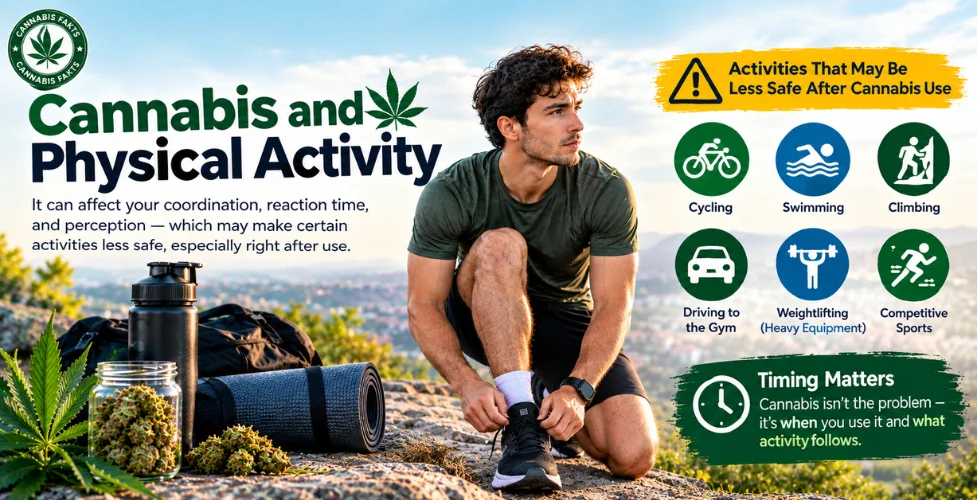
The Cannabis effect can also influence exercise and physical activity.Immediately after cannabis use, changes in coordination, reaction time, attention, and perception can make certain physical activities less safe.
Activities such as cycling, swimming, climbing, driving to a gym, weightlifting with heavy equipment, or participating in competitive sports require coordination and judgment.Cannabis before exercise may therefore increase safety concerns, especially when the activity involves speed, heights, water, traffic, or heavy equipment.
This does not mean every cannabis user is inactive. Instead, the important consideration is when cannabis is used and what activity follows it.
Cannabis and Relationships
Cannabis can also become part of a person’s social and relationship life.Some couples or friends may use cannabis together as a recreational activity, while others may have different attitudes toward it. These differences can create disagreements about frequency, spending, social environments, responsibilities, or intoxication.
Problems are more likely to become significant when cannabis use begins interfering with communication, responsibilities, finances, intimacy, or shared activities.The CDC lists continuing cannabis use despite social or relationship problems as a potential sign of cannabis use disorder.
Healthy communication can help couples establish boundaries around cannabis use. Important questions can include:
- How frequently is cannabis being used?
- Is it affecting shared responsibilities?
- Does either partner feel uncomfortable about the use?
- Is cannabis being used to avoid difficult conversations?
- Is it affecting intimacy or communication?
- Are financial or household responsibilities being neglected?
Cannabis is a choice, not a personality. Communication comes first.
Cannabis and Family Life
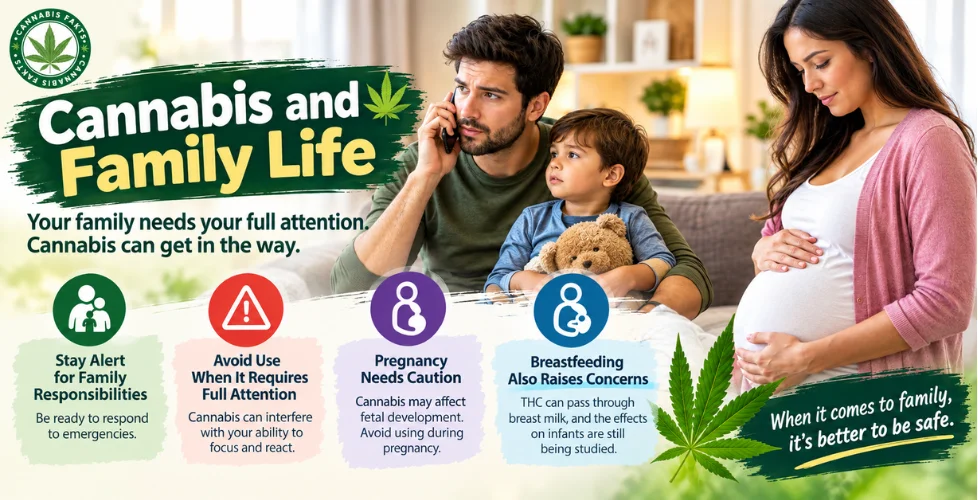
Frequent or disruptive cannabis use can also affect family responsibilities. Parents and caregivers must stay attentive and remain capable of responding to emergencies. Using cannabis when a situation requires full attention can interfere with these responsibilities. Pregnancy and breastfeeding also raise specific concerns.
The CDC’s guidance on cannabis during pregnancy states that cannabis may affect fetal development and recommends avoiding cannabis during pregnancy. THC can also pass through breast milk, and the potential effects on infants remain an area of concern.Therefore, pregnancy and breastfeeding require additional caution rather than applying assumptions based on an individual’s recreational experience with cannabis.
Cannabis and Lung Health
The method of consumption also matters.Smoking cannabis exposes the respiratory system to smoke and combustion products. According to the World Health Organization’s cannabis evidence, persistent cannabis smoking can cause airway injury and lung inflammation and has been associated with respiratory symptoms such as chronic bronchitis.
Different consumption methods can change exposure patterns, but that does not mean every non-smoking method is risk-free.Edibles, vaping, concentrates, and other products each have different pharmacological and safety considerations.
Cannabis and Appetite
A well-known short-term cannabis effect is increased appetite. THC can influence appetite and food-related behavior.This is one reason cannabis has been studied in connection with appetite loss and certain medical conditions.However, increased appetite can have different lifestyle implications depending on what a person eats.
If cannabis regularly leads to high-calorie snacking, late-night eating, or changes in dietary habits, it may indirectly influence overall nutrition and weight management.The relationship between cannabis and body weight is complex, and observational studies can produce different findings. Cannabis should not serve as a reliable weight-loss or weight-gain strategy without appropriate medical guidance.
Cannabis and Dependence
Cannabis use disorder is one of the most important long-term lifestyle considerations. Although people sometimes describe cannabis as non-addictive, scientific evidence does not support that absolute claim.
The CDC’s information on cannabis use disorder explains that some people develop problems controlling their cannabis use. Signs may include craving cannabis, continuing to use it despite problems, needing higher amounts to achieve the same effect, and giving up important activities because of cannabis use. Factors such as frequency of use and THC concentration can influence the risk.
Signs Cannabis May Be Affecting Your Lifestyle
A person may want to reassess their cannabis use if they notice patterns such as:
- Cannabis interfering with work or education
- Spending more time or money on cannabis than intended
- Continuing to use despite relationship problems
- Driving after cannabis use
- Losing interest in previously important activities
- Feeling unable to reduce or stop use
- Needing increasingly stronger products
- Experiencing problems with memory or concentration
- Using cannabis primarily to escape difficult emotions
These signs do not mean every cannabis user has cannabis use disorder, but they can indicate that professional advice may be appropriate.
Does Frequency Change the Cannabis Effect?
Yes. Frequency is an important part of understanding cannabis exposure.Occasional use and frequent use are not equivalent from a risk perspective. Similarly, a low-THC product and a highly concentrated THC product may produce very different effects.
The CDC’s cannabis health research notes that highly concentrated THC products are associated with more severe cannabis use disorder symptoms.This makes product potency an important consideration when evaluating the potential Cannabis effect.
A person’s age also matters. Adolescents and young adults may face greater concerns because brain development continues into early adulthood.
Cannabis Effect: Short-Term vs. Long-Term
It helps to separate immediate effects from longer-term associations.
| Area | Possible short-term Cannabis effect | Longer-term concern |
| Memory | Temporary impairment | Problems with attention and learning may occur with problematic use |
| Coordination | Reduced coordination | Can contribute to safety risks |
| Driving | Slower reactions and altered perception | Increased crash risk associated with impaired driving |
| Mental health | Anxiety, paranoia, disorientation | Increased risk of psychosis, particularly with earlier and frequent use |
| Work | Reduced attention or judgment | Possible interference with responsibilities when use becomes problematic |
| Relationships | Changes in communication or behavior | Continued use despite relationship problems may signal disorder |
| Sleep | Relaxation or perceived sleep benefit | Sleep patterns may become complicated with frequent use |
| Physical activity | Impaired coordination | Potential interference with exercise and safety |
| Respiratory health | Irritation from smoke | Persistent smoking can affect respiratory health |
| Dependence | Craving can occur | Cannabis use disorder can develop |
The table should not be interpreted as saying that every user will experience every effect. Cannabis outcomes vary substantially between individuals.
What Factors Influence the Cannabis Effect?
The effects of cannabis can depend on several variables.
THC Concentration
Higher THC concentrations generally produce stronger psychoactive effects and can increase the likelihood of unpleasant experiences or problematic use.
Frequency of Use
Frequent use can increase exposure and may increase the risk of developing cannabis use disorder.
Age
Younger users may face greater concerns because the brain continues developing through adolescence and into young adulthood.
Method of Consumption
Smoking, vaping, concentrates, and edibles produce different patterns of absorption and duration.
Individual Biology
Genetics, previous cannabis experience, physical health, mental health, and tolerance can all influence an individual’s response.
Combining Substances
Combining cannabis with alcohol or other psychoactive substances can increase impairment and complicate the effects.
How to Make More Informed Lifestyle Decisions
Understanding the Cannabis effect does not require assuming that every person will experience cannabis in the same way.Instead, consider the relationship between cannabis and your everyday responsibilities.
Is cannabis affecting my concentration?
If cannabis consistently interferes with studying, working, or completing important tasks, that is worth considering.
Is cannabis affecting my relationships?
If arguments, communication problems, or social withdrawal increasingly connect to cannabis use, you may find it useful to reassess the pattern.
Am I using cannabis safely?
Avoid driving or operating machinery while impaired.
Am I using cannabis to manage every difficult emotion?
If cannabis becomes the primary method of handling stress, anxiety, sadness, or sleep problems, consider whether additional coping strategies or professional support could help.
Can I control how much I use?
Difficulty cutting back despite wanting to do so can be an important warning sign.
What Does Research Say Overall?
Research does not support a simple conclusion that cannabis has one universal effect on lifestyle.The National Academies’ comprehensive evidence review found different levels of evidence across different health outcomes, ranging from substantial or moderate evidence for some associations to limited or insufficient evidence for others.
More recent evidence continues to develop. In August 2026, the World Health Organization published an updated technical brief on the health and social effects of nonmedical cannabis use, reflecting continued scientific interest in cannabis use disorders and broader health and social consequences.This ongoing research is important because cannabis products, particularly high-THC products, have changed considerably over time.
Final Thoughts: How Does Cannabis Affect Your Lifestyle?
The Cannabis effect can extend beyond the period of feeling intoxicated. Depending on the individual and pattern of use, cannabis may influence attention, memory, coordination, mental health, sleep, physical activity, relationships, work, family responsibilities, and transportation decisions.The effects are not identical for everyone. Frequency, THC potency, age, consumption method, individual biology, and the use of other substances can all influence outcomes.
The most useful approach is therefore not to reduce cannabis to a simple “good” or “bad” label. Instead, look at measurable effects on everyday life.If cannabis use does not interfere with responsibilities, safety, relationships, or health, its lifestyle impact may be different from someone whose use has become frequent or difficult to control. When cannabis begins creating problems despite attempts to change the pattern, speaking with a qualified healthcare professional can provide individualized guidance.
Ultimately, understanding the Cannabis effect means looking beyond the immediate experience and considering how cannabis fits into the bigger picture of health, safety, relationships, work, and daily life.