If you’re one of the millions living with daily chronic pain, you already know the exhaustion that comes with it — not just in your body, but in your spirit. Sleepless nights, missed moments, and a relentless search for relief that actually lasts. Now, a rapidly growing body of medical research is bringing a once-controversial option into serious clinical discussion: cannabis therapy for chronic pain. Physicians, pain specialists, and patients worldwide are reevaluating what this plant-based medicine can do — and the findings are turning heads. Whether you’re exploring alternatives to opioids or simply want to understand what the science says, this comprehensive guide has everything you need to make an informed decision. Keep reading — what you learn here could genuinely change how you manage your pain.
What Is Cannabis Therapy for Chronic Pain?
Cannabis therapy refers to the medically supervised use of cannabis-derived compounds — primarily cannabidiol (CBD) and tetrahydrocannabinol (THC) — to alleviate persistent pain conditions. Unlike recreational cannabis use, cannabis-based medicine in clinical settings focuses on dosage, formulation, and the specific type of pain being treated.
Chronic pain affects an estimated 20.4% of U.S. adults, according to the Centers for Disease Control and Prevention (CDC), with approximately 7.4% experiencing high-impact chronic pain that limits daily life. Standard treatments — opioids, NSAIDs, corticosteroids — come loaded with side effects, dependency risks, and diminishing returns over time. This growing treatment gap is precisely why medical cannabis for pain has entered mainstream medical dialogue.
Read More: Cannabis and Mental Health: What Research Says
How Cannabis Works Against Pain: The Science
The Endocannabinoid System (ECS)
To understand cannabis pain management, you first need to know about the endocannabinoid system (ECS) — a complex cell-signaling network present in every human body. The ECS regulates pain, inflammation, mood, sleep, and immune response through receptors called CB1 and CB2.
- CB1 receptors are concentrated in the brain and central nervous system, influencing pain perception and emotional response.
- CB2 receptors are found primarily in immune tissues and peripheral nervous system, playing a key role in inflammation modulation.
THC binds directly to both CB1 and CB2 receptors, producing analgesic (pain-relieving) effects. CBD, on the other hand, doesn’t bind directly but modulates the ECS indirectly — reducing inflammation, anxiety, and nerve sensitization without producing a psychoactive “high.”
What the Research Says
A landmark 2017 report by the National Academies of Sciences, Engineering, and Medicine concluded there is “substantial evidence” that cannabis is an effective treatment for chronic pain in adults — one of the most definitive scientific endorsements to date.
A 2020 review published in the Journal of Clinical Medicine analyzing over 28 studies found that medical cannabis users reported a 30–50% reduction in pain intensity across conditions including neuropathic pain, fibromyalgia, and cancer-related pain.
The World Health Organization (WHO), in its 2019 Critical Review of CBD, noted that cannabidiol demonstrates a “good safety profile” and shows therapeutic promise across multiple pain-related conditions, including neuropathic pain relief and inflammatory disorders.
Key Benefits of Cannabis Therapy for Chronic Pain
1. Neuropathic Pain Relief
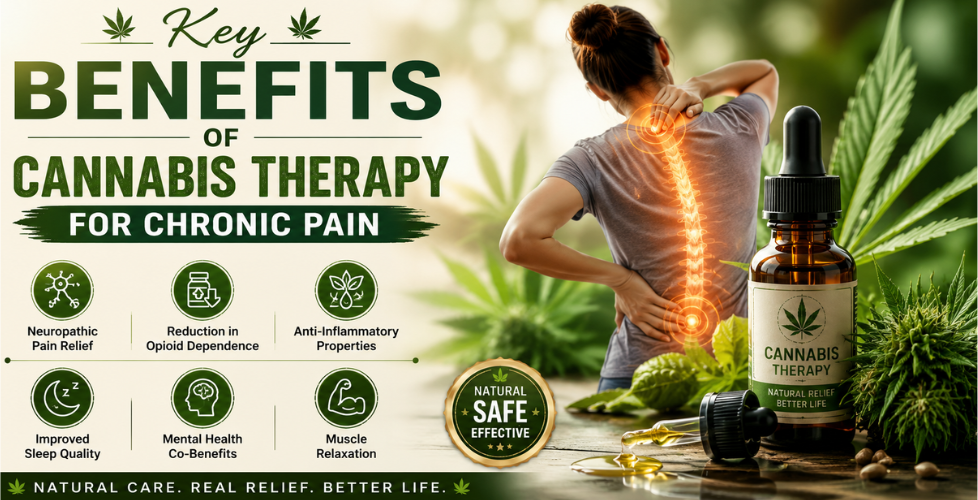
Neuropathic pain — caused by nerve damage from diabetes, multiple sclerosis, or injury — is notoriously difficult to treat. Several randomized controlled trials, including studies published in Neurology and the Canadian Medical Association Journal, found that inhaled cannabis significantly reduced neuropathic pain compared to placebo.
2. Reduction in Opioid Dependence
One of the most cited cannabis therapy benefits is its role in opioid-sparing. A 2016 study in the Journal of Pain found that medical marijuana legalization was associated with a 25% reduction in opioid overdose mortality at the state level. Patients using cannabis for pain often reduced or eliminated opioid use entirely.
3. Anti-Inflammatory Properties
CBD, in particular, has demonstrated potent anti-inflammatory effects in preclinical and clinical studies. Conditions like rheumatoid arthritis, inflammatory bowel disease, and chronic back pain — all driven by inflammation — may respond well to cannabis-based medicine as part of a broader treatment plan.
4. Improved Sleep Quality
Chronic pain and insomnia are deeply intertwined. THC has been shown to reduce the time it takes to fall asleep and increase deep sleep stages. Patients in several observational studies reported meaningfully better sleep quality after beginning cannabis pain management protocols.
5. Mental Health Co-Benefits
Living with chronic pain dramatically increases the risk of anxiety and depression. CBD’s anxiolytic (anti-anxiety) and mood-stabilizing properties can address these co-occurring conditions — making it a compelling alternative pain therapy with a broader wellbeing profile than most pharmaceuticals.
6. Muscle Relaxation and Spasm Control
THC has well-documented muscle relaxant properties. For conditions like multiple sclerosis (MS) — where muscle spasticity causes significant daily pain — Sativex (a THC/CBD oromucosal spray) is approved in over 25 countries specifically for this use.
Types of Cannabis Used in Pain Management
| Type | Primary Compound | Common Uses |
| Medical CBD oil | CBD | Inflammation, anxiety, nerve pain |
| THC-dominant cannabis | THC | Severe pain, muscle spasms, sleep |
| Balanced THC:CBD products | Both | General chronic pain, MS, fibromyalgia |
| Topical CBD | CBD | Localized joint/muscle pain |
| Sativex (nabiximols) | THC + CBD | MS-related spasticity |
Read More: Cannabis Use at Work: Rules & Risks Explained
Risks and Side Effects: What You Need to Know
Cannabis therapy is not without risks, and responsible reporting demands honest disclosure.
Short-Term Side Effects
- Dizziness or lightheadedness
- Dry mouth
- Cognitive impairment (especially with high-THC products)
- Increased heart rate
- Anxiety or paranoia (dose-dependent)
Long-Term Concerns
- Cannabis use disorder — approximately 9% of users may develop dependence, per the NIH National Institute on Drug Abuse (NIDA)
- Respiratory risks if smoked (alternative delivery methods like oils and capsules are recommended for medical use)
- Memory and cognitive effects with prolonged heavy THC use
- Potential interactions with blood thinners, antidepressants, and sedatives
Who Should Exercise Caution
- Pregnant or breastfeeding individuals
- People with a history of psychosis or schizophrenia
- Adolescents and young adults (ongoing neurodevelopment)
- Those with severe cardiovascular conditions
Important: Always consult a licensed healthcare provider before starting any cannabis-based treatment plan.
Expert Insights: What Physicians and Researchers Are Saying
Dr. Mark Ware, former Chief Medical Officer of Canopy Growth and a leading pain researcher at McGill University, has stated: “For patients who have not responded to conventional therapies, medical cannabis represents a legitimate option that warrants serious clinical consideration.”
The American Academy of Pain Medicine acknowledges that while evidence is still evolving, cannabis-based medicines show promise for specific chronic pain subtypes — particularly neuropathic and cancer-related pain.
The British Medical Association (BMA) recommends that cannabis-based medicines be considered within a structured, multidisciplinary pain management framework, not as a standalone replacement for conventional care.
A consistent theme among pain specialists: individualization matters. The right compound, dose, delivery method, and patient profile determine outcomes. Cannabis is not a one-size-fits-all solution — but for many patients, it’s the missing piece.
Legal Considerations: Know the Law in Your Region
The legal status of medical cannabis varies significantly by country and region:
United States
- 38 states and Washington D.C. have legalized medical marijuana as of 2024
- The DEA still classifies cannabis as a Schedule I substance at the federal level — a legal contradiction that limits research funding and insurance coverage
- CBD derived from hemp (less than 0.3% THC) is federally legal under the 2018 Farm Bill
United Kingdom
- Medical cannabis was legalized in November 2018
- Prescriptions must be issued by a specialist consultant, not a GP
- Products like Sativex and Epidyolex are approved for specific conditions
Canada
- Full medical and recreational legalization since 2018
- Patients access medical cannabis through licensed producers with physician support
Australia
- Medical cannabis is legal and regulated by the Therapeutic Goods Administration (TGA)
- Prescriptions available via the Special Access Scheme or Authorised Prescribers
Legal Tip: Always verify your local regulations before purchasing or using any cannabis-based product. Possession laws differ dramatically even within countries.
Cannabis vs. Traditional Chronic Pain Treatments
| Factor | Cannabis Therapy | Opioids | NSAIDs |
| Addiction risk | Low–Moderate | High | Low |
| Side effect profile | Mild–Moderate | Severe | Moderate |
| Long-term efficacy | Promising | Declining | Variable |
| Neuropathic pain | Strong evidence | Moderate | Weak |
| Dependency concerns | Possible | Very common | Rare |
| Natural origin | Yes | No | No |
How to Start: Practical Guidance for Patients
If you’re considering cannabis therapy for chronic pain, here’s a responsible roadmap:
- Consult a pain specialist or cannabis-knowledgeable physician — Self-medicating without guidance increases risks
- Understand your diagnosis — Different pain types respond to different cannabinoid profiles
- Start low, go slow — Begin with a low-THC or CBD-dominant product and adjust gradually
- Choose the right delivery method — Oils and capsules offer more precise dosing than smoking
- Track your symptoms — Keep a pain diary to monitor changes in intensity, sleep, and mood
- Be honest with all your doctors — Cannabis can interact with other medications
Read More: Dating Someone Who Uses Cannabis: What to Know
Is Cannabis Therapy Right for Chronic Pain?
The evidence is compelling — and it’s growing. Cannabis therapy for chronic pain is no longer a fringe idea. It’s backed by multiple large-scale reviews, endorsed with cautious optimism by major medical bodies, and increasingly integrated into pain management programs globally.
It is not a cure. It is not risk-free. And it is not appropriate for every patient. But for individuals living with treatment-resistant chronic pain — particularly neuropathic, inflammatory, or cancer-related pain — cannabis-based medicine offers a legitimate, evidence-supported option that deserves serious consideration within a comprehensive care plan.
The future of chronic pain treatment is multimodal. Cannabis may well be one of its most valuable tools.
Frequently Asked Questions
Q1: Is cannabis therapy safe for long-term chronic pain management?
Research suggests that cannabis therapy is relatively safe for many patients when used under medical supervision. Long-term risks include potential dependency (in approximately 9% of users) and cognitive effects with prolonged high-THC use. Regular monitoring by a healthcare provider is essential for long-term use.
Q2: What type of cannabis is best for chronic pain?
It depends on the pain type. Neuropathic pain often responds well to balanced THC:CBD products. Inflammatory pain may benefit more from high-CBD formulations. Your physician should guide product selection based on your specific diagnosis and health profile.
Q3: Can CBD alone relieve chronic pain without THC?
CBD alone has demonstrated anti-inflammatory and mild analgesic properties, particularly for conditions like arthritis. However, for severe chronic pain, the combination of THC and CBD (the “entourage effect”) tends to produce stronger results in clinical observations.
Q4: Will cannabis therapy show up on a drug test?
Yes. THC and its metabolites are detectable in urine, blood, and hair for days to weeks after use. CBD products derived from hemp may still contain trace THC. If workplace drug testing is a concern, discuss this with your doctor before starting treatment.
Q5: Is medical cannabis covered by insurance?
In most countries, including the U.S. and U.K., medical cannabis is not routinely covered by standard insurance or public health programs due to its complex legal status. Out-of-pocket costs vary widely by product and dosage.
Q6: How long does it take for cannabis therapy to work for chronic pain?
Onset time depends on delivery method. Inhaled cannabis works within minutes; oils sublingually within 15–45 minutes; capsules or edibles may take 1–2 hours. Long-term therapeutic effects for chronic conditions typically emerge over several weeks of consistent use.
Q7: Can I use cannabis therapy alongside other pain medications?
Some combinations are safe; others are not. Cannabis can interact with blood thinners, sedatives, and antidepressants. Never adjust or discontinue medications without consulting your prescribing physician.
Read More: New Study Explores Cannabis for Relationship Bonding
Conclusion: Take the Next Step Toward Informed Pain Relief
Chronic pain doesn’t define you — but finding the right treatment can redefine your life. Cannabis therapy for chronic pain represents one of the most actively studied and discussed frontiers in modern pain medicine. As evidence continues to mount and regulations evolve, patients and providers alike have more reason than ever to engage in open, informed conversations about this option.
If you’re struggling with chronic pain and wondering whether cannabis-based medicine might help, the most important first step is to speak with a qualified healthcare professional — a pain specialist, neurologist, or cannabis medicine clinician in your region.
Knowledge is your most powerful tool. Share this article with someone who needs it, bookmark it for future reference, and take that conversation with your doctor today. Relief may be closer than you think.