Millions of people around the world are turning to cannabis — legally or otherwise — in hopes of managing anxiety, depression, and chronic stress. But what does the science actually tell us? The relationship between cannabis and mental health is far more nuanced than either advocates or critics suggest. From potentially easing anxiety symptoms to raising red flags around psychosis risk and dependency, the evidence cuts both ways. Before you decide what cannabis means for your psychological well-being, you owe it to yourself to understand the full, research-backed picture. This article dives deep into the data — and it may change how you think.
Understanding the Cannabis–Mental Health Relationship
Cannabis — derived from the Cannabis sativa plant — contains over 100 active chemical compounds called cannabinoids. The two most researched are tetrahydrocannabinol (THC), responsible for the psychoactive “high,” and cannabidiol (CBD), which is non-intoxicating and increasingly studied for its therapeutic potential. Together, these compounds interact with the body’s endocannabinoid system (ECS), a network of receptors that plays a central role in regulating mood, memory, pain, and emotional processing.
This neurological connectivity is precisely why the cannabis impact on mental health is such a contested and critical area of modern psychiatry and neuroscience. Research has expanded dramatically over the past decade, and the picture that emerges is complex: cannabis does not operate as a universal remedy or a universal danger — its effects are highly dependent on the compound used, the dosage, the frequency of use, individual brain chemistry, and age of first use.
Insights:
| Statistic | Value |
| Tried cannabis (lifetime) | ~4B |
| Annual users (global) | 209M |
| Dependency rate | 9–17% |
| Psychosis risk (adolescents) | 2× |
Read More: Cannabis Use at Work: Rules & Risks Explained
Why the ECS Matters for Mental Health
The Endocannabinoid System (ECS) is a core biological network that helps regulate emotional balance, stress response, sleep cycles, and overall mental stability. It functions as a natural buffering system against psychological distress by maintaining internal equilibrium in the brain. Understanding its role is essential for explaining how cannabis interacts with mental health and emotional regulation.
- The ECS regulates fear extinction, allowing the brain to process and move past traumatic experiences.
- It plays a key role in stress adaptation, anxiety control, and sleep regulation.
- When functioning properly, it helps maintain emotional stability and psychological resilience.
- Disruption of the ECS through chronic stress, heavy cannabis use, or genetic factors may impair mood regulation.
- Cannabis interacts with this system because it mimics natural endocannabinoids, influencing CB1 receptors in the brain.
- Repeated high-dose stimulation may potentially alter the system’s natural balance over time.
- The ECS contains 600+ brain regions with CB1 receptors, highlighting its widespread influence.
- It was first scientifically identified in the 1990s, marking a major breakthrough in neuroscience.
- The cannabis plant contains 100+ cannabinoid compounds that interact with this system.
Potential Benefits: Anxiety, Stress, and Mood Regulation
Among the most widely cited reasons people turn to cannabis is the search for relief from anxiety and psychological tension. Survey-based studies consistently show that a significant proportion of users report consuming cannabis for anxiety relief, stress reduction, and emotional regulation. But does the science support these subjective reports?
Cannabis for Anxiety Relief: What the Evidence Shows
Research published in journals such as Frontiers in Psychiatry and JAMA Psychiatry indicates that low-to-moderate doses of CBD — and in some contexts, low-THC products — may produce measurable anxiolytic (anti-anxiety) effects. A 2019 retrospective study involving over 100 patients found that CBD administration was associated with a significant reduction in anxiety scores in nearly 80% of participants within the first month of treatment.
There is also growing interest in whether cannabis reduces stress through direct modulation of the hypothalamic-pituitary-adrenal (HPA) axis, the body’s primary stress-response system. Animal studies have suggested that cannabinoids can reduce cortisol secretion, though human trials remain limited and findings are inconsistent. The relationship is dose-dependent and bidirectional — meaning small amounts may reduce stress, while large or chronic doses may amplify it.
Research Insight:
Low-dose CBD appears to modulate serotonin receptor activity (specifically 5-HT1A receptors) in a manner similar to conventional anxiolytics, which may help explain reports of cannabis emotional wellbeing improvements seen in observational studies. However, most clinical trials remain short-term and small in scope.
Cannabis and Depression: A Mixed Picture (Short Version)
Interest in cannabis for depression is rising, especially as traditional antidepressants show limits. Some research suggests CBD may promote brain cell growth and affect serotonin, with fast-acting antidepressant-like effects seen in animal studies.
In humans, the link is less clear. People with depression are more likely to use cannabis, but heavy THC use is also linked to worsening symptoms over time, making cause and effect hard to determine.
Overall, cannabis may provide short-term relief for some, but it is not supported as a primary or long-term treatment for major depression.
Cannabis Mood Regulation: What’s Really Happening?
Cannabis interacts with dopaminergic pathways, which are central to reward, motivation, and mood. THC specifically triggers dopamine release in the brain’s reward circuitry — which is why many users experience euphoria following consumption. In the short term, this can provide meaningful cannabis mood regulation for individuals experiencing low mood or emotional flatness.
However, chronic activation of these pathways can desensitize dopamine receptors over time, potentially impairing a person’s capacity for natural reward — a phenomenon sometimes associated with cannabis dependency and what clinicians describe as “amotivational syndrome.” THC effects on mood disorders are therefore highly context-dependent: short-term relief can mask or eventually exacerbate longer-term dysregulation.
Risks and Negative Effects: Psychosis, Dependency, and Brain Impact
A balanced discussion of cannabis mental health effects demands serious engagement with the documented risks. These are not fringe concerns or prohibitionist rhetoric — they are findings from peer-reviewed research published in some of the world’s leading psychiatric journals.
Cannabis and Psychosis: A Well-Documented Association
Perhaps the most serious mental health risk associated with cannabis use is its association with psychosis. High-potency THC products have been repeatedly linked to increased risk of psychotic episodes, including symptoms such as paranoia, hallucinations, and disorganized thinking. A landmark 2019 study published in The Lancet Psychiatry — spanning 11 sites across Europe and Brazil — found that daily cannabis use was associated with a nearly five-fold increase in the odds of developing a psychotic disorder, rising to a seven-fold increase for daily use of high-potency cannabis.
The cannabis and psychosis link appears to be strongest among individuals who: begin using cannabis in adolescence; have a personal or family history of psychotic illness; consume high-THC products daily; and use cannabis without the potential moderating effect of CBD.
Risk Alert
Researchers estimate that if high-potency cannabis were unavailable, approximately 12% of new cases of psychosis in high-use populations could be prevented. This figure underscores the public health urgency of understanding cannabis mental health risks — particularly in regions where very potent products dominate the market.
Read More: Dating Someone Who Uses Cannabis: What to Know
Cannabis Addiction and Mental Health: Understanding Dependency
Contrary to the popular claim that cannabis is “not addictive,” research clearly establishes that cannabis use disorder (CUD) is a clinically recognized condition. Roughly 9% of people who try cannabis will develop a dependency, a rate that rises to 17% among those who begin in adolescence and up to 25–50% among daily users.
Common cannabis dependency symptoms include: cravings and difficulty controlling use; tolerance (needing more to achieve the same effect); withdrawal symptoms (irritability, insomnia, appetite loss); continued use despite recognizing negative consequences; and significant impairment in social, occupational, or academic functioning.
The connection between cannabis addiction and mental health runs in both directions. Pre-existing mental health conditions — particularly anxiety disorders, PTSD, and depression — are known risk factors for developing cannabis use disorder. Conversely, CUD significantly worsens outcomes for individuals with co-occurring psychiatric conditions.
Negative Effects of Cannabis on the Brain
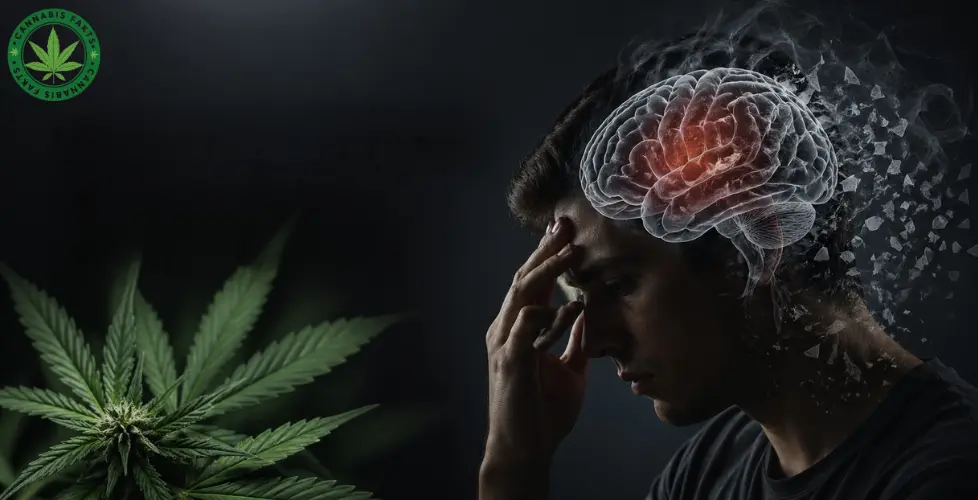
Neuroimaging research has produced concerning findings about the negative effects of cannabis on the brain, particularly for adolescent and young adult users. Studies using MRI have documented structural differences in the hippocampus and prefrontal cortex — brain regions critical for memory, decision-making, and impulse control — among long-term heavy users compared to non-users.
A 25-year longitudinal study published in JAMA Psychiatry found that persistent cannabis users showed an average IQ decline of approximately 8 points when use began in adolescence — a finding that remained significant after controlling for confounders like socioeconomic status and other substance use. However, IQ effects in adult-onset users were less pronounced, suggesting that a developing brain may be particularly vulnerable to cannabis’s neurological impact.
Cannabis and Panic Attacks
A frequently underreported phenomenon is the connection between cannabis use and panic attacks. High doses of THC are known to induce acute anxiety, paranoia, and panic in a significant minority of users — even experienced ones. These episodes can be severe and may, in some cases, trigger the onset of panic disorder in predisposed individuals. This paradox — cannabis being used to manage anxiety while simultaneously capable of causing panic — reflects the critical importance of strain, dosage, and individual neurochemistry in predicting outcomes.
- High-potency THC: Strongly associated with acute panic, paranoia, and long-term psychosis risk
- Frequent adolescent use: Linked to hippocampal shrinkage, memory deficits, and elevated depression risk
- Daily adult use: Associated with cannabis use disorder, motivational deficits, and worsened mood regulation
- Co-occurring mental illness: Cannabis use significantly complicates treatment outcomes for schizophrenia, bipolar disorder, and major depression
Withdrawal: Even regular users can experience irritability, sleep disruption, and anxiety upon cessation
THC vs CBD for Mental Health: What’s the Difference?
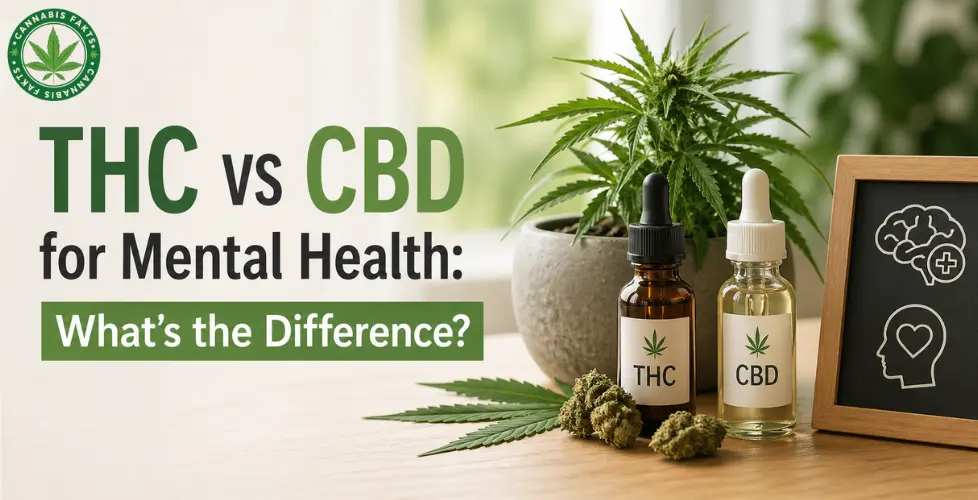
One of the most important distinctions in the cannabis mental health debate is the difference between THC and CBD. These two compounds act on different receptor pathways and produce markedly different psychological effects — yet they are often lumped together in public discourse.
| Aspect | THC | CBD |
| Psychoactivity | High, produces a “high” | None, non-intoxicating |
| Anxiety | May reduce low-dose anxiety; high doses may trigger panic | Reduces anxiety in studies |
| Depression | Short-term lift; possible worsening with heavy use | Potential antidepressant effects |
| Psychosis Risk | Higher risk, especially with heavy use | Possible protective effects |
| Dependency | Moderate to high risk | Very low risk |
| Stress | Mixed effects; may rebound anxiety | Supports stress reduction |
| Regulation | Mostly controlled/restricted | Widely legal; FDA-approved use (Epilepsy) |
Research Takeaway
The emerging scientific consensus on THC vs CBD for anxiety suggests that CBD holds considerably more promise as a therapeutic agent for mental health conditions, while THC’s utility is more context-dependent, dose-sensitive, and risk-laden — particularly for individuals with psychiatric vulnerability. CBD for stress management in particular has gained traction as an area of active clinical investigation.
Read More: New Study Explores Cannabis for Relationship Bonding
How THC Affects the Brain’s Reward System
THC disrupts the brain’s natural reward circuit by overstimulating dopamine release through CB1 receptor activation. This creates intense pleasure but can also alter emotional balance and increase dependency risk over time.
- THC triggers a 2–4× dopamine surge via CB1 receptors
- Repeated use reduces CB1 receptors, leading to tolerance
- Natural rewards (socializing, achievement) feel less satisfying over time
- Can contribute to low mood, irritability, and anxiety during withdrawal
- Long-term use is linked to reduced motivation and pleasure (anhedonia)
- Adolescents are more vulnerable due to ongoing brain development
- Early use increases risk of dependency and mood disorders
Research-Based Insights and the Balanced Perspective
The scientific literature on weed and psychological health increasingly points toward a need for nuanced, personalized risk assessment rather than broad generalizations. Major research institutions — including the National Academy of Sciences, the World Health Organization, and Harvard Medical School — have all released reports acknowledging both the therapeutic potential and the documented risks of cannabis use.
Key takeaways from recent meta-analyses and systematic reviews include:
- There is substantial evidence that cannabis can effectively treat pain and chemotherapy-induced nausea — though mental health applications remain more uncertain
- Evidence for cannabis in treating anxiety disorders is promising but insufficient for clinical recommendations without further large-scale randomized controlled trials
- The evidence for cannabis use causing psychosis in genetically predisposed individuals is now considered robust and well-replicated
- CBD’s safety profile is considerably more favorable than THC’s; most adverse effects in trials were mild and transient
- Adolescent exposure is consistently identified as a critical risk window — regulations restricting youth access are strongly supported by neuroscience
- Self-medication of mental health conditions with cannabis — without clinical guidance — is associated with worse long-term outcomes in most published cohort studies
A particularly important insight from the research is what epidemiologists call the “reverse causality problem.” Because people with mental health conditions are significantly more likely to use cannabis than the general population, it becomes methodologically challenging to disentangle whether cannabis is causing psychological deterioration, or whether psychological distress is driving people toward cannabis use — or both simultaneously.
Frequently Asked Questions
Q1. Does cannabis help with anxiety?
CBD may help reduce anxiety by influencing serotonin activity, while low THC doses may offer short-term relief. However, high THC levels can increase anxiety and trigger panic symptoms.
Q2. Can cannabis cause psychosis?
Yes, especially with frequent use of high-THC products or in genetically vulnerable individuals. Risk is significantly higher in early users and those with a family history of psychotic disorders.
Q3. What is the difference between THC and CBD for mental health?
THC is psychoactive and may either relieve or worsen symptoms depending on dose, while CBD is non-intoxicating and generally linked to safer anxiety and stress outcomes.
Q4. Is cannabis addictive?
Yes, cannabis use disorder is recognized clinically, with higher dependency risk in daily users and adolescents. Symptoms include cravings, tolerance, withdrawal, and reduced control.
Q5. Does cannabis help with depression?
CBD may show potential antidepressant effects, but heavy THC use is linked to worsening depression. Current evidence is insufficient to recommend cannabis for clinical depression treatment.
Q6. Is CBD safe for stress management?
CBD is generally considered safe and non-habit-forming, with growing evidence for stress relief. However, product quality and dosage vary, so professional guidance is recommended.
Q7. At what age is cannabis most harmful to mental health?
The highest risk is during adolescence and early adulthood (under 25), when brain development is ongoing. Early use is linked to long-term cognitive and psychiatric risks.
Read More: Marijuana Use Isn’t a Dating Red Flag, Survey Finds
Conclusion: Evidence Over Ideology
Cannabis and mental health is a complex, non-binary issue that requires an evidence-based approach. While low-dose CBD under medical guidance may help with anxiety, stress, and certain mood symptoms, risks remain significant for adolescents, heavy THC users, and individuals with a genetic vulnerability to psychosis or dependency. Cognitive impairment, psychosis, and addiction are well-documented concerns in these groups. A responsible approach requires scientific research, regulated potency, youth protection, and clear public education on THC vs CBD differences. Individuals using cannabis for mental health support should consult healthcare professionals, as self-medication may temporarily mask symptoms while worsening underlying conditions.